
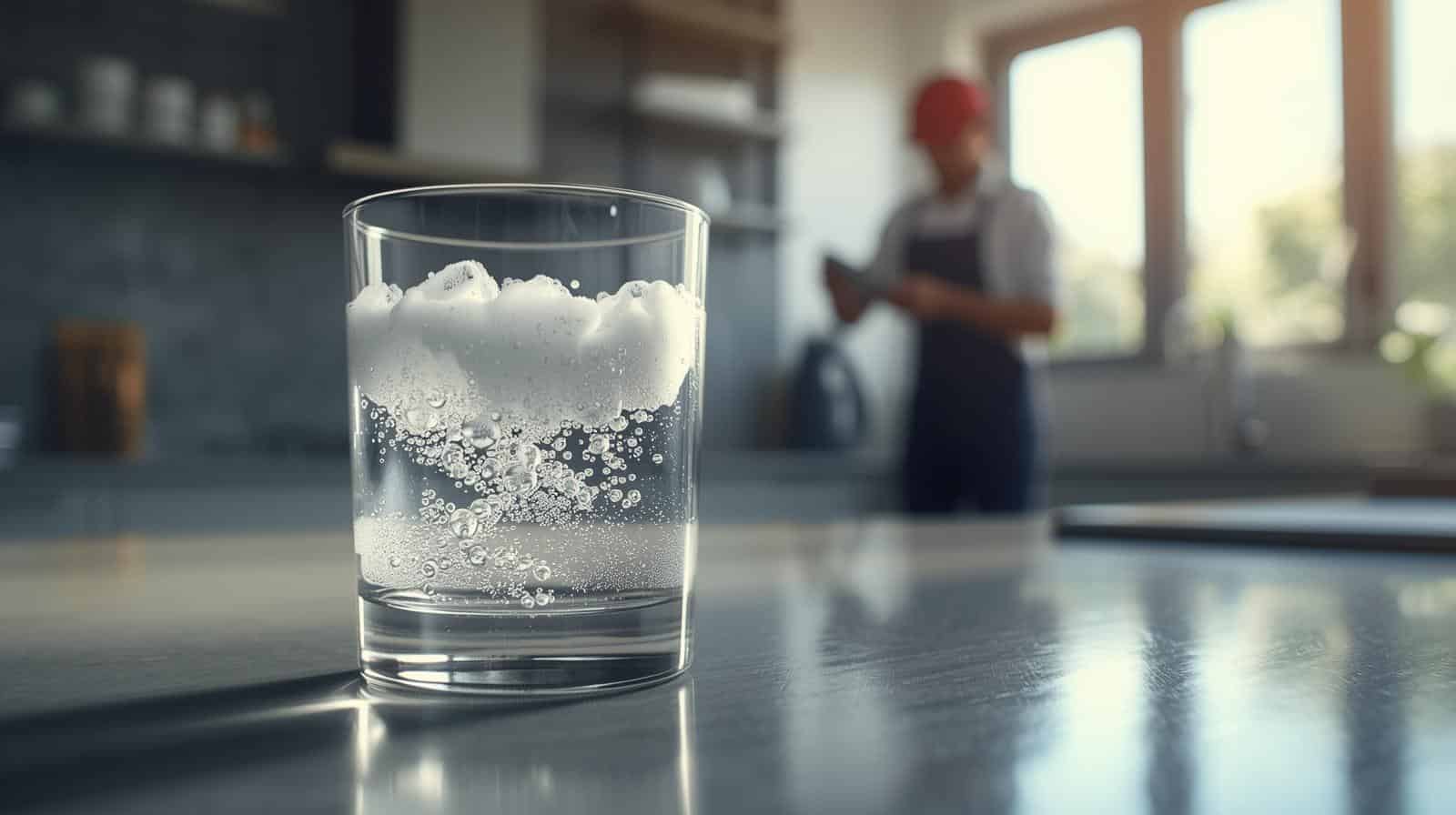
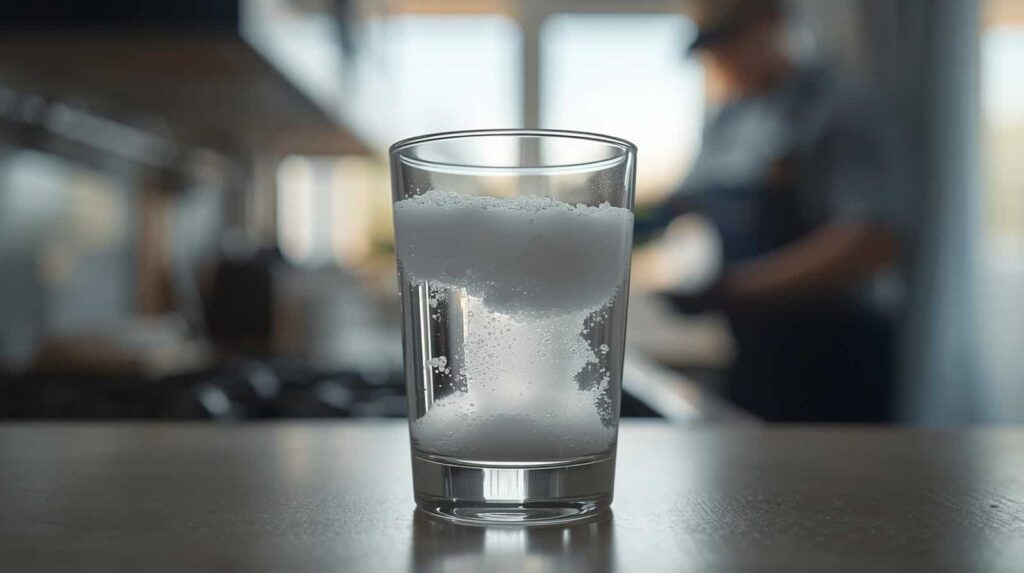
Yesterday, I saw a glass of hot water turn milky right in front of me while helping a neighbor fix his kitchen sink. He looked at me and said, “Is this safe?” I smiled. I’ve seen this a hundred times. If you’re dealing with air bubbles in hot water, you’re not alone—and most of the time, it’s nothing to panic about.
Let me walk you through it the simple way I would if I were standing in your kitchen.
Why Do You See Air Bubbles in Hot Water?
When you heat water, tiny air pockets get pushed out. That’s it. Sounds simple, right?
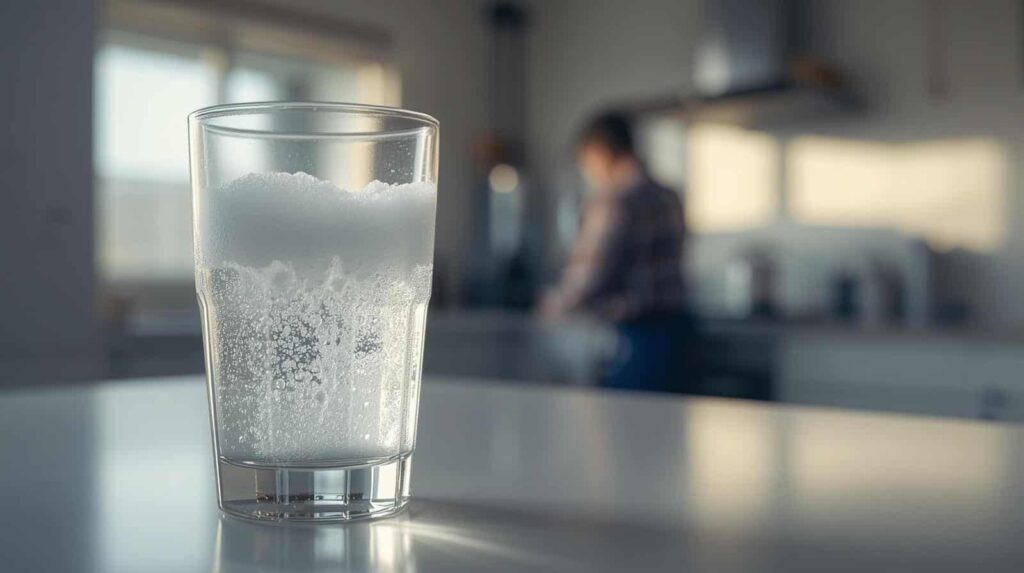
Cold water holds more air. When it heats up inside your water heater, that air turns into tiny bubbles. These bubbles make your water look cloudy or white.
Have you ever poured soda into a glass and seen bubbles rise? Same idea.
👉 Pro Tip: If your water clears from the bottom up in about 30–60 seconds, it’s almost always harmless air bubbles.
Quick Test: Is It Really Air Bubbles?
Here’s what I always tell homeowners to do.
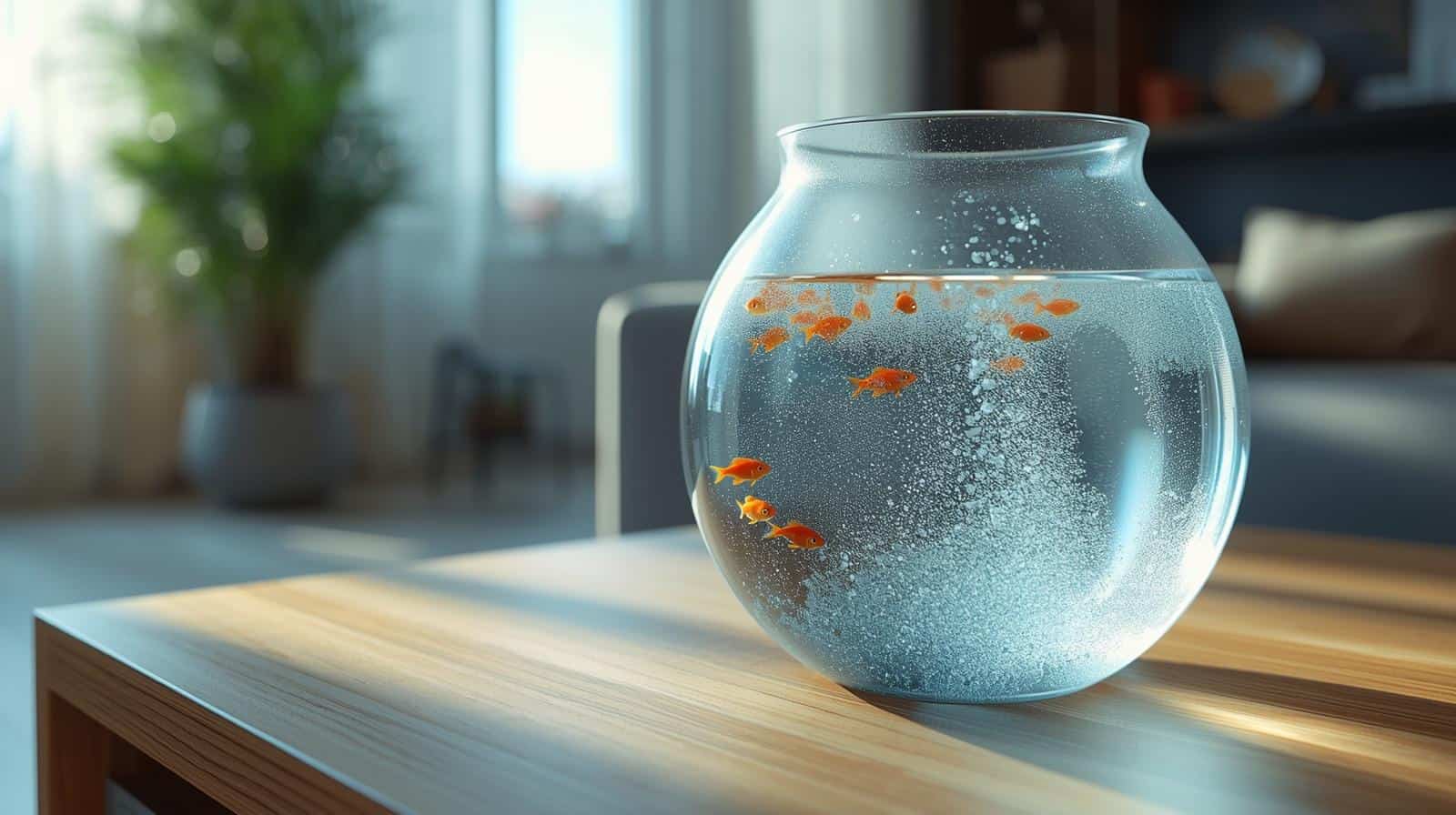
Step-by-Step Glass Test
- Grab a clear glass
- Fill it with hot water
- Let it sit on the counter
Now watch closely.
- Clears from bottom → It’s air bubbles
- Stays cloudy → Could be sediment
- Smells bad → Might be your water heater
👉 Pro Tip: Hold the glass up to light. Air bubbles will move. Dirt won’t.

Why Only Hot Water?
- This part confuses a lot of people.
- You turn on cold water—clear. Hot water—cloudy. Why?
- Because the issue is inside your water heater.
- Heat + pressure = bubbles.
- That’s why air bubbles in hot water show up more than in cold water.
👉 Pro Tip: If BOTH hot and cold are cloudy, the problem may be in your main water line, not the heater.
When It’s NOT Just Air Bubbles
- Now here’s the catch.
- Not all cloudy water is harmless.
- Watch for these signs:
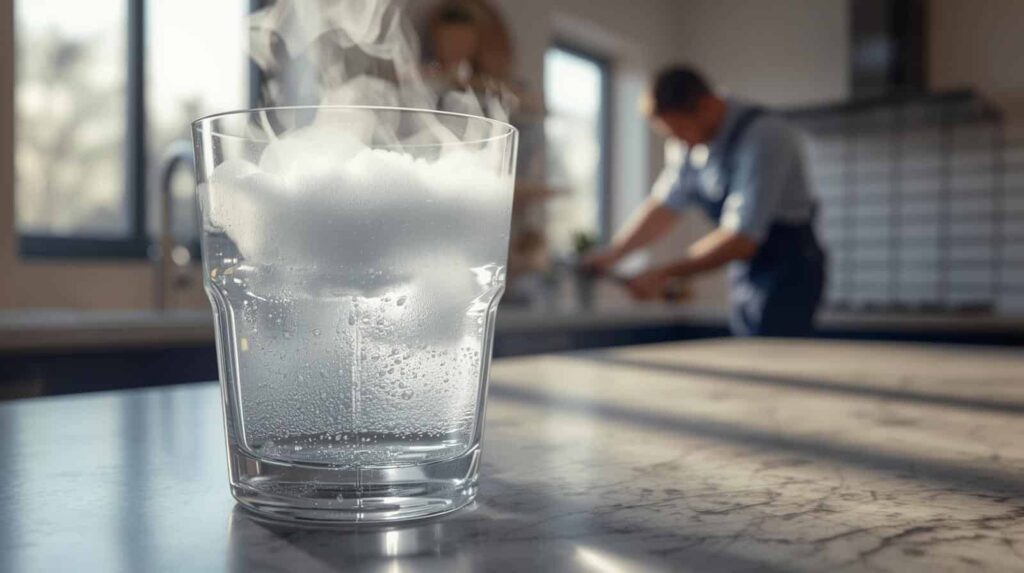
1. Water stays cloudy
That could mean sediment buildup.
2. You see tiny particles
That’s likely hard water minerals.
3. Rotten egg smell
That’s often your anode rod reacting inside the tank.
👉 Pro Tip: If your heater makes popping sounds, sediment is building up inside.

Simple Fixes You Can Try Today
Let’s keep this easy. Here’s what I usually do first.
Step 1: Lower the Temperature
- Set your heater to around 120°F.
- Less heat = fewer bubbles.
Step 2: Run the Tap
Let hot water run for a few minutes.
This clears trapped air.
Step 3: Flush the Tank
- Sediment can trap air and make things worse.
- If you haven’t flushed your heater in a year, it’s time.
Step 4: Check Water Pressure
High pressure can force more air into the water.
👉 Pro Tip: If you’re not sure how to flush the tank, don’t guess—call a pro. I’ve seen DIY jobs go wrong fast.
Safety First ⚠️
Most of the time, air bubbles in hot water are safe.
But don’t ignore these warning signs:
- Bad smell
- Yellow or brown color
- Water that never clears
If you see any of these, stop drinking it and get it checked.
👉 Pro Tip: When in doubt, use a simple water filter or bottled water until you know it’s safe.
My Personal Fix (Real Story)
- I remember fixing my first cloudy water job years ago.
- The homeowner thought the water was unsafe.
- Turned out, it was just trapped air after a pressure change in the line.
- We did the glass test. Waited 30 seconds. Clear.
- Problem solved. No parts needed.
- That’s why I always say—test first, don’t panic.
Quick Summary
- Air bubbles in hot water are usually harmless
- If water clears fast → no problem
- If it stays cloudy → check sediment
- Smell = possible heater issue
- Regular flushing helps prevent problems
If you’ve been staring at cloudy water and wondering what’s going on, now you know.
Most of the time, it’s simple. And fixable.