

Yesterday morning I saw a blocked sink drain at my own house. I had just made eggs and toast. I went to rinse the pan, and the sink filled up like a tiny pool. Sound familiar? I’ve fixed sinks for more than 15 years, and I can tell you this: a blocked sink drain is one of the most common kitchen problems. The good news? Most times you can fix it yourself in less than 30 minutes.
Let me walk you through what I usually do when I see a blocked sink drain. No hard tools. No big words. Just simple steps that work.
Why Your Sink Drain Gets Blocked
Before we fix it, let’s talk about why it happens.
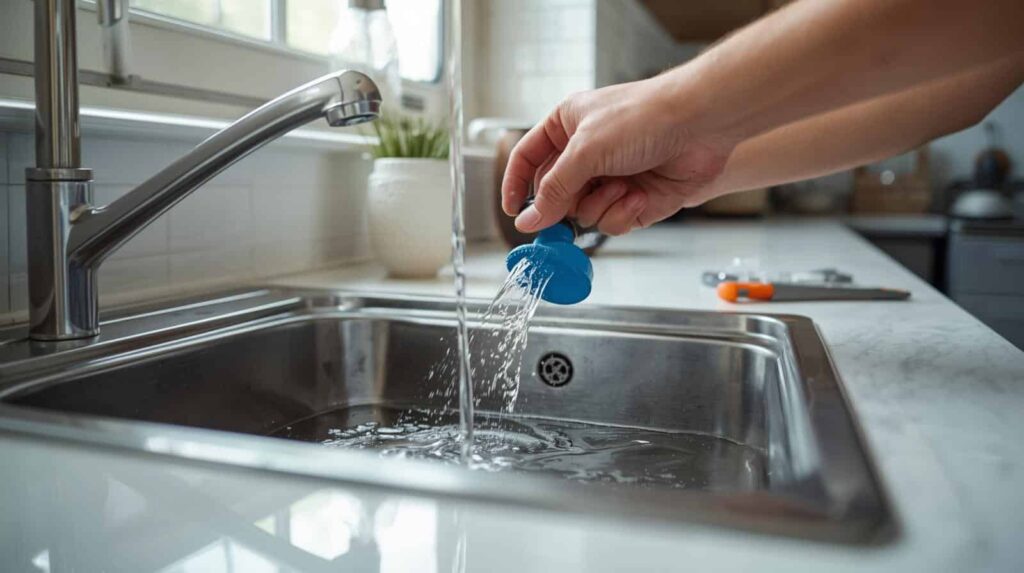
Most of the time a kitchen sink clogs because of a few things:
- Grease from meat or oil
- Small food bits
- Soap scum
- Coffee grounds
- Rice or pasta that swells in water
These slowly stick to the pipe walls. Day after day they build up. One day… the water just stops moving.
Pro Tip: I keep a small jar next to my sink for grease. I pour oil into it instead of the drain. That one habit saves a lot of trouble.
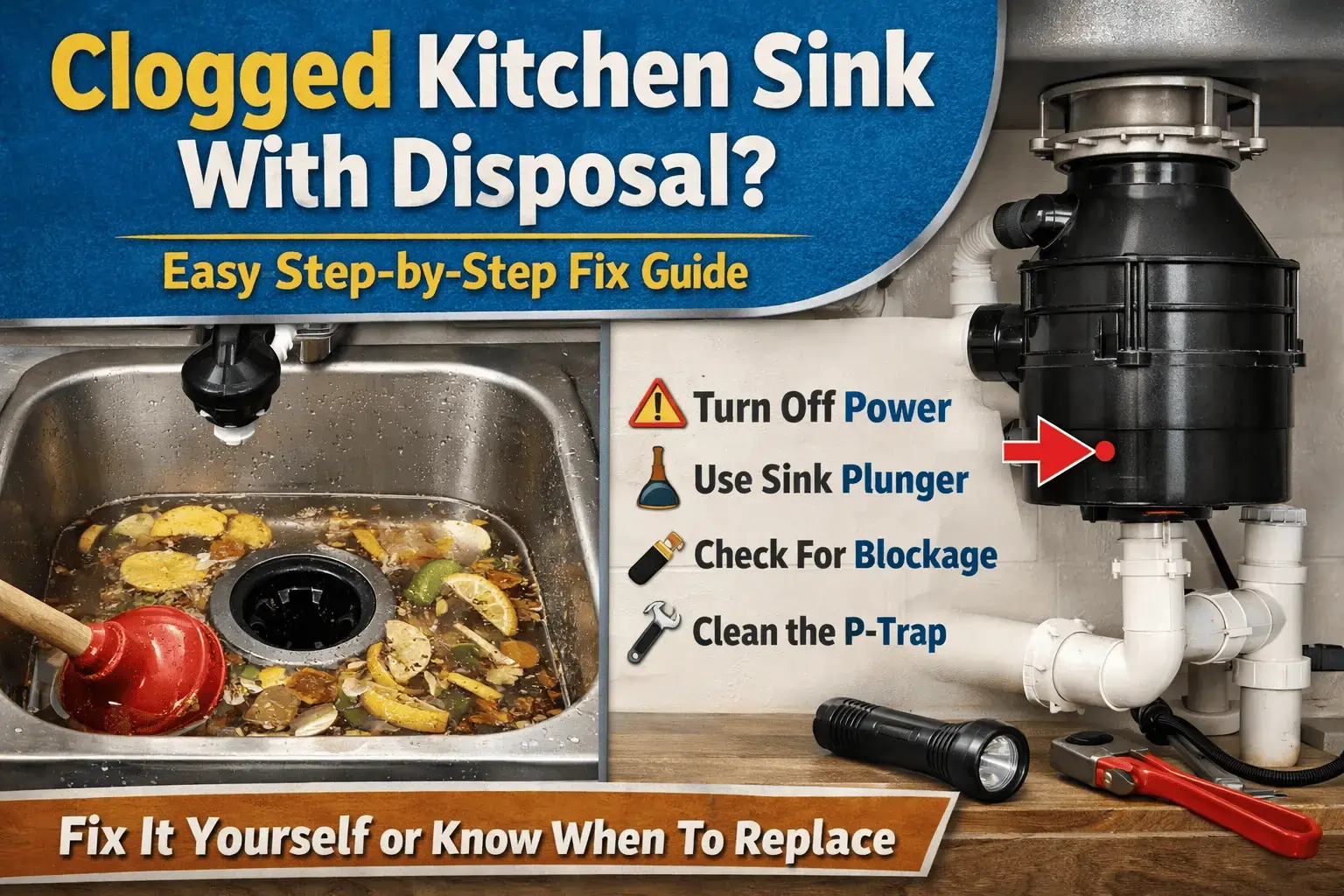
Step-by-Step Guide to Fix a Blocked Sink Drain
Let’s start with the easiest fix and move up if needed.
1. Try Hot Water First
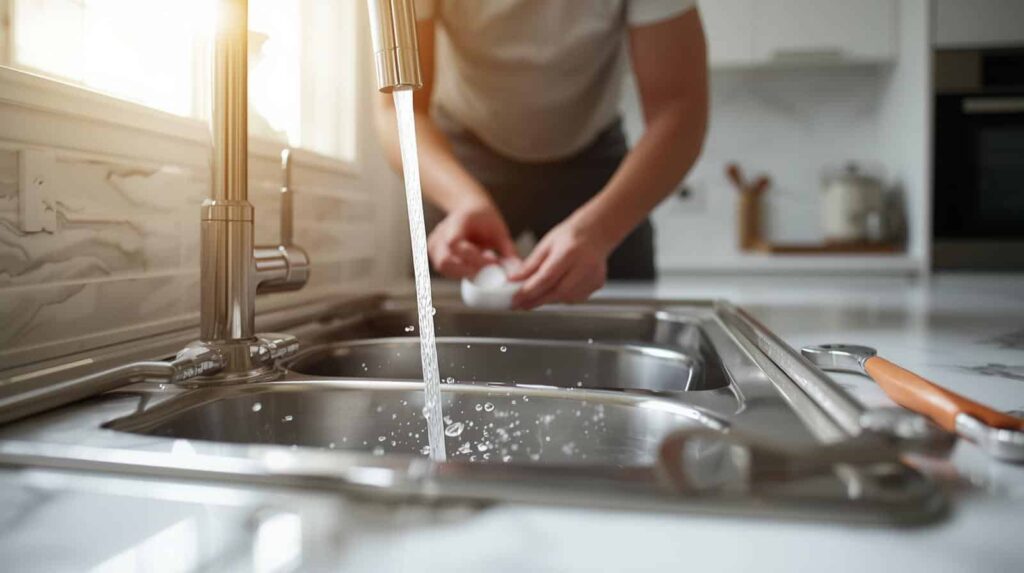
This is the first trick I try on almost every blocked sink drain.
- Boil a full kettle of water.
- Next, clear out any standing water from the sink. Then slowly pour the hot water down the drain.
- Grease is often the main cause of clogs. Heat melts it and helps it slide away.
- Wait a minute. Then run hot tap water.
- If the sink drains faster, you’re already winning.
Pro Tip: Pour the water in two rounds. Half first, wait 30 seconds, then pour the rest.

2. Baking Soda and Vinegar Trick
This is an old trick. It works more often than people think.
Here is what I do:
- Pour 1 cup baking soda into the drain
- Pour 1 cup white vinegar after it
- Let the fizz happen for about 15 minutes
- Flush with hot water
The fizz helps break up grease and soft gunk inside the pipe. Have you ever seen the volcano project kids do at school? Same idea.
Pro Tip: Put a drain plug over the hole while it fizzes. That keeps the power in the pipe.

3. Use Salt and Hot Water
- Salt works like a scrub brush inside your pipes.
- Remove the standing water first.
- Then pour half a cup of table salt into the drain. Follow it with hot water.
- The rough salt helps scrape off grease stuck inside.
- Let it sit for about five minutes, then rinse again.
Pro Tip: Coarse salt works better than fine salt.
4. Grab a Plunger
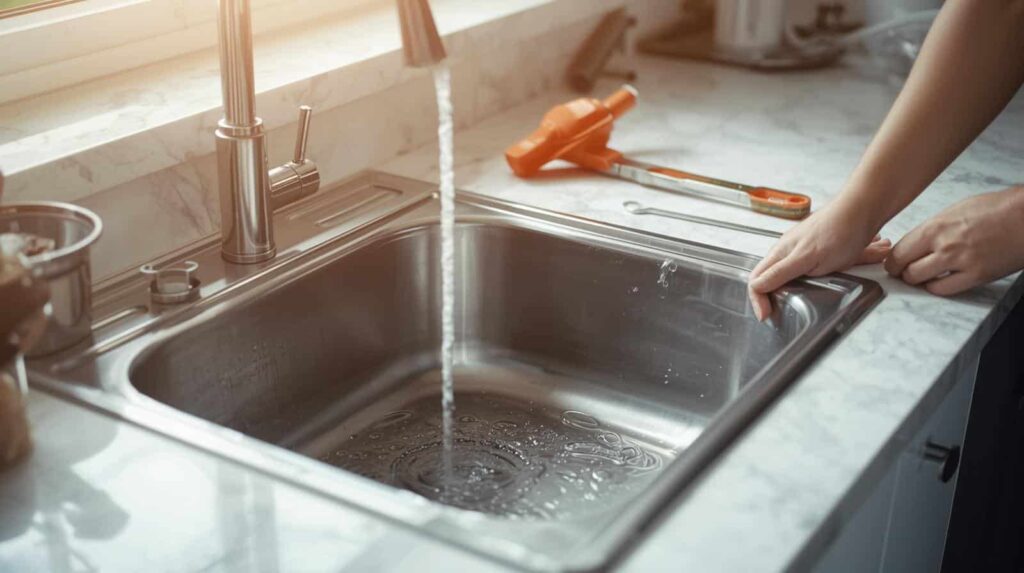
- If the clog is deeper, a plunger helps move it.
- Fill the sink with enough water to cover the rubber cup of the plunger.
- Then push down and pull up fast about 10–15 times.
- You should hear a deep suction sound.
- That means the clog moved.
- Run warm water after that to wash the pipe.
Pro Tip: If you have a double sink, plug the other side with a rag first. That helps build pressure.

5. Check the P-Trap Pipe
- Now we get a little more hands-on.
- The P-trap is the curved pipe under your sink. Food and grease often sit there.
- Place a bucket under it.
- Unscrew the pipe slowly. Some water will spill out.
- Clean out any gunk you see.
- Put it back and test the sink again.
Pro Tip: Take a quick phone photo before you remove the pipe. That helps when putting it back.
6. Use a Drain Snake
- If the clog is deeper, a drain snake can reach it.
- Feed the metal cable into the pipe slowly.
- When you feel resistance, twist the handle.
- That grabs or breaks the clog.
- Pull the snake out and rinse the drain.
- This tool is cheap and very useful for sink repair.
Pro Tip: Turn the snake slowly. Fast spins can scratch pipes.
Safety First
Before working on any sink repair, keep a few safety rules in mind.
- Wear rubber gloves
- Never mix drain chemicals
- Turn off garbage disposal power
- Use tools slowly and carefully
Chemical drain cleaners may look easy, but they can damage pipes and skin. I avoid them unless nothing else works.
How to Prevent Future Sink Clogs
A few simple habits keep your sink healthy.
Try these:
- Wipe grease from pans before washing
- Use a sink drain strainer
- Run hot water after washing dishes
- Never dump coffee grounds in the sink
Small habits make a big difference.
Pro Tip: Once a week, I pour hot water and a spoon of dish soap down my drain. It keeps grease from sticking.
Quick Summary
A blocked sink drain is annoying, but most of the time you can fix it yourself.
Start simple.
- Pour hot water
- Try baking soda and vinegar
- Use salt and hot water
- Plunge the drain
- Clean the P-trap
- Use a drain snake
If the sink keeps clogging again and again, it may be time to replace the disposal or drain parts.
Take it slow. Stay safe. And remember—most kitchen drain clogs are easy fixes once you know where to start.