
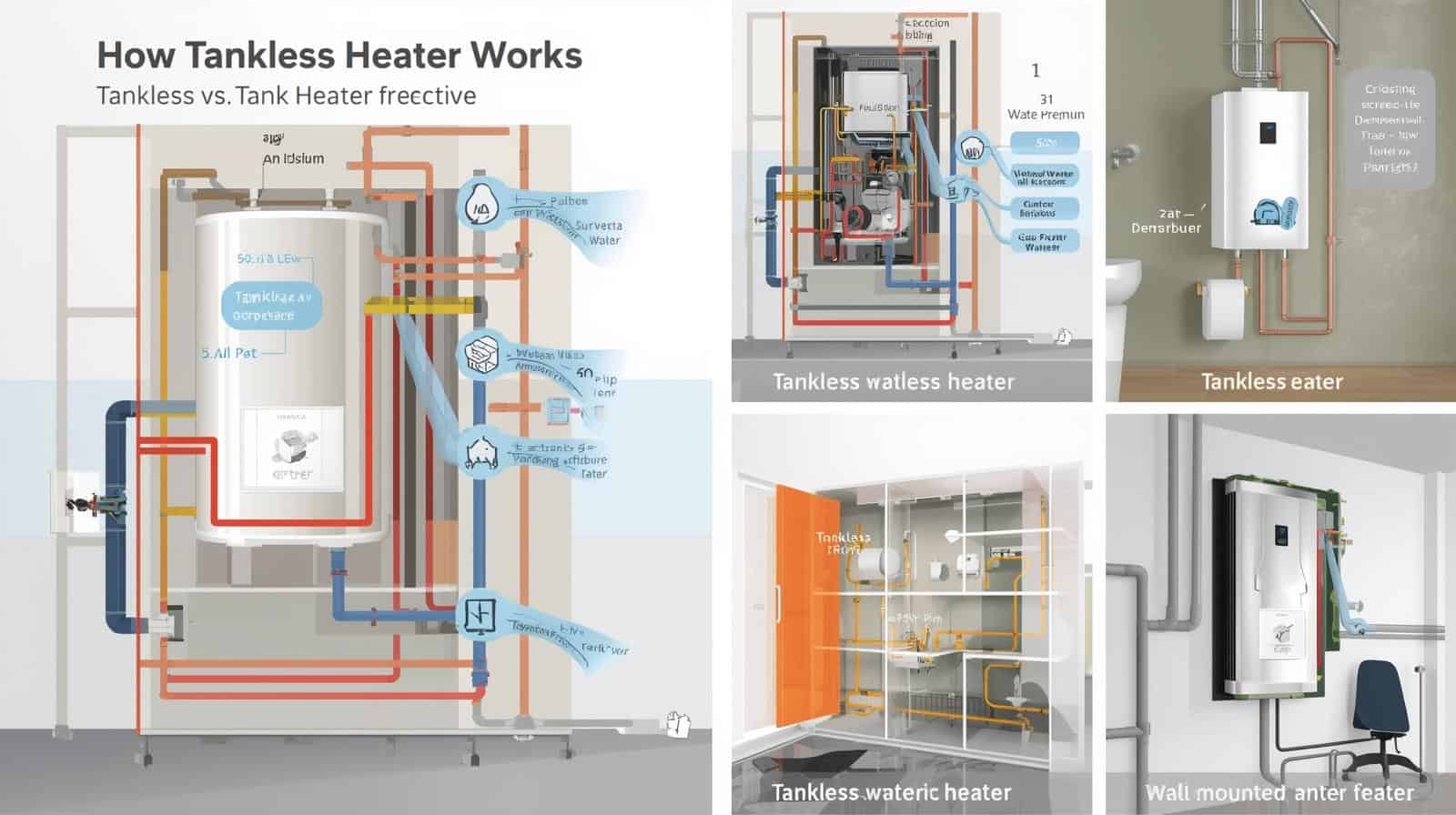
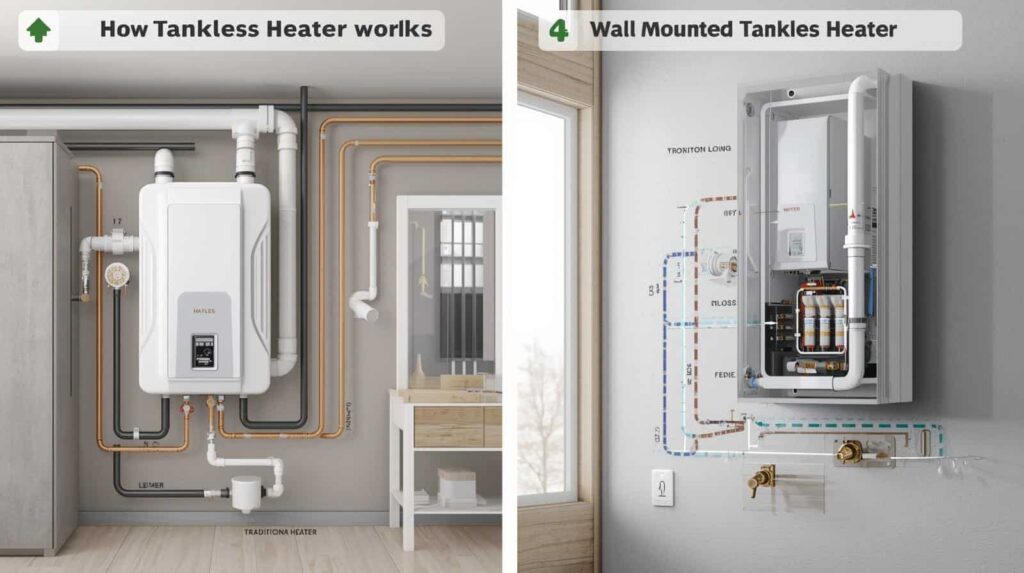
A Tankless Water Heater heats water only when you turn on a hot tap. Cold water flows into the unit, passes through a heat part, and a gas flame or electric coil heats the water right away. Because it does not store water in a tank, you get hot water on demand.
Yesterday I Fixed One That Had No Hot Water
Yesterday, I saw a home where the shower went cold in the middle of the day. The owner said the hot water ran out too fast. Sound familiar?
When I opened the wall panel, I saw a Tankless Water Heater that had a dirty filter and low flow.
Once I cleaned the filter and reset the unit, hot water came back in seconds.
That moment made the owner ask a great question:
How does a tankless water heater work?
Let me walk you through it the same way I explain it to my own clients.
Step-by-Step: How a Tankless Water Heater Works
Step 1: You Turn On the Hot Tap
It starts the moment you open the sink, tub, or shower.
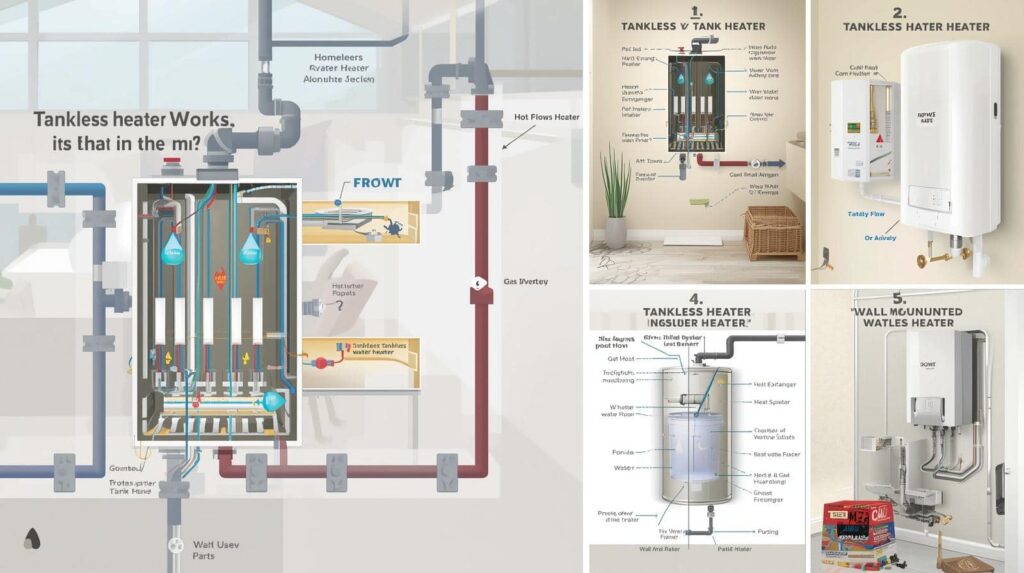
Cold water moves into the heater through a pipe. A flow sensor inside the unit feels the water move.
This tells the heater to wake up.
Pro Tip:
If water flow is too weak, the heater may not start. A clogged pipe or filter can stop it.
Step 2: The Heater Turns On
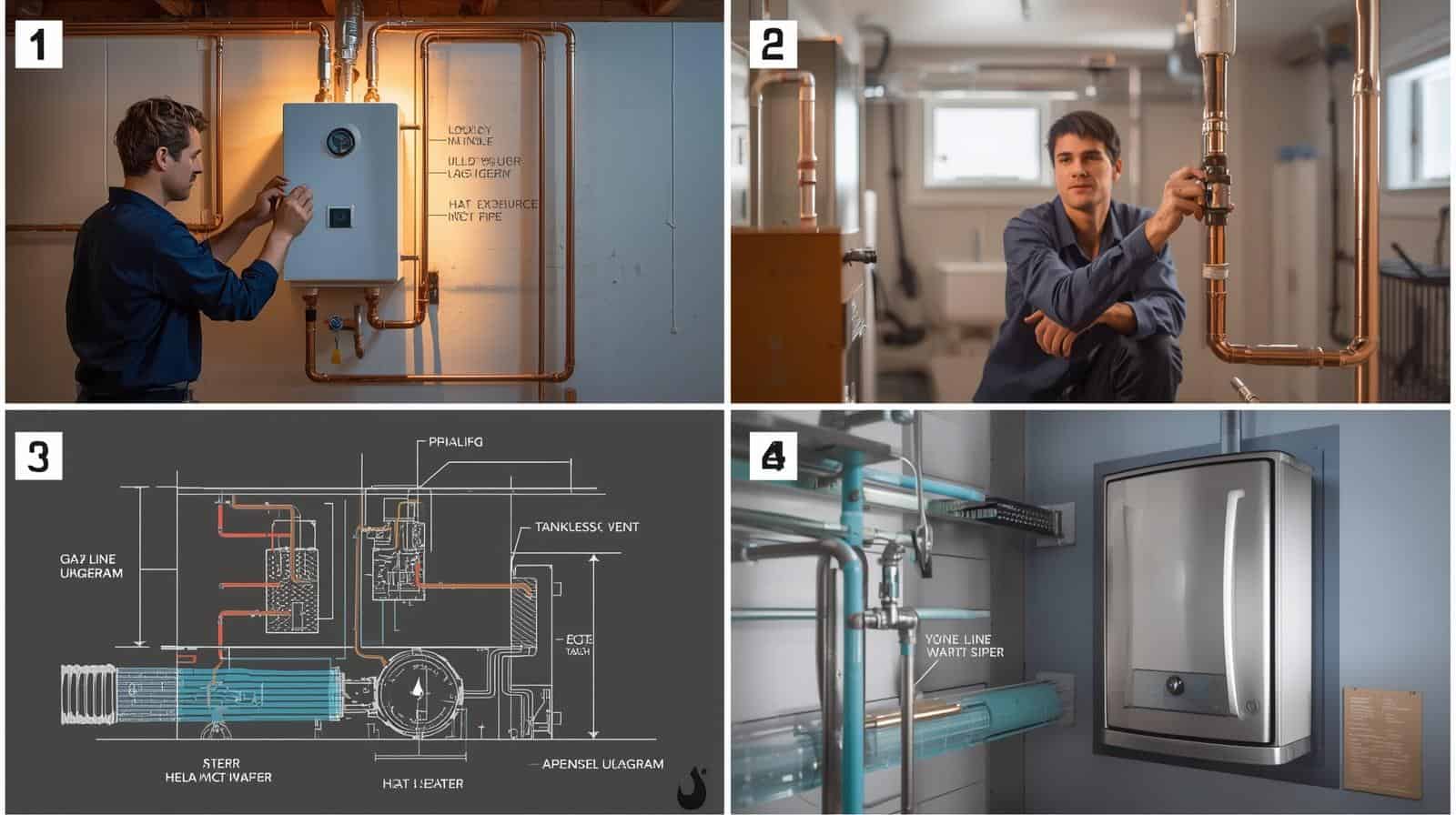
Next, the heater fires up.
Depending on the model, it uses:
- a gas flame
- or an electric coil
Gas units heat water faster. Electric units are smaller and cost less to install.
Both heat water in seconds.
Pro Tip:
Gas models often give higher flow, which helps if two showers run at once.

Step 3: Water Moves Through the Heat Part
Inside the unit is a metal tube called a heat exchanger.
Cold water flows through this tube. The flame or coil heats the metal. The heat moves into the water as it passes through.
By the time the water leaves the unit, it is already hot.
No tank. No wait.
Pro Tip:
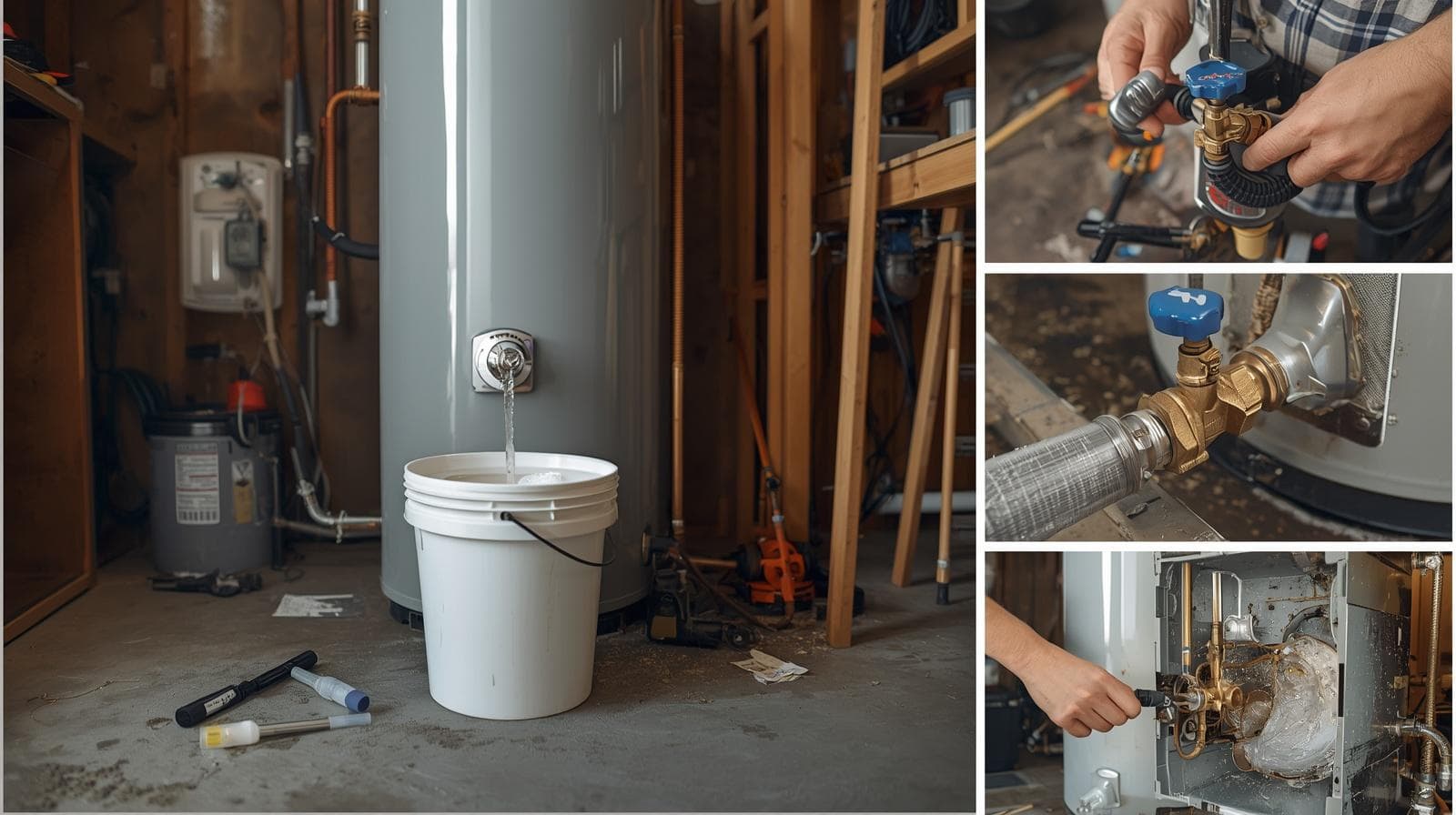
Hard water can build scale in the heat part. A yearly flush keeps the heater strong.
Step 4: Hot Water Goes to Your Faucet
Now the heated water travels through your pipes and out the faucet.
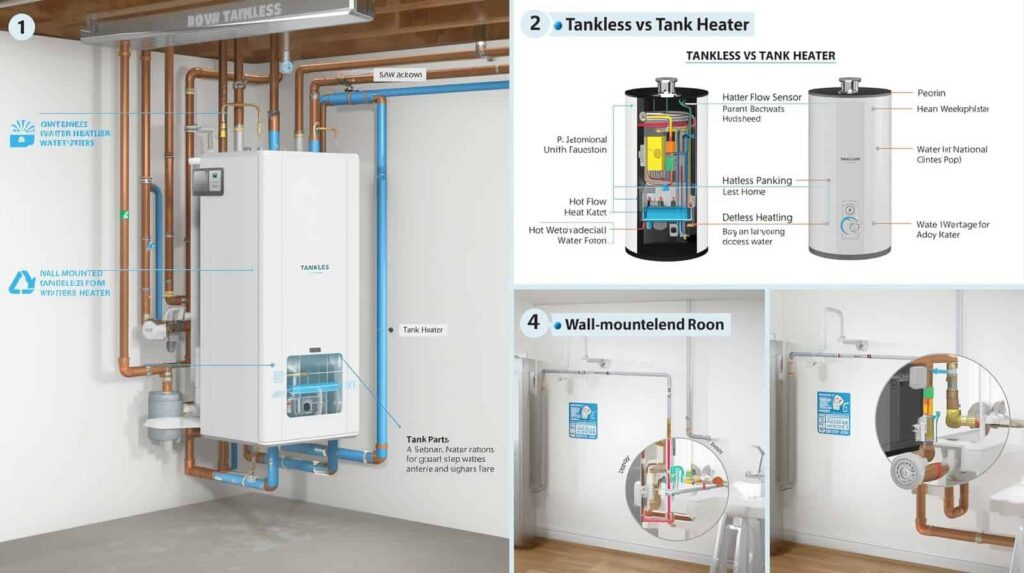
As long as water keeps flowing, the heater keeps working.
Once you shut off the tap, the unit stops.
That means it uses energy only when you need hot water.
Pro Tip:
This is why many homes save energy with tankless systems.
Why Tankless Water Heaters Are Different
Old tank heaters store 40–50 gallons of hot water. Once the tank runs empty, you must wait for it to heat again.
A tankless water heater works in a different way. It heats water only when you turn on the tap. That means you get hot water on demand without storing it in a tank.
Here’s a quick comparison:
| Feature | Tankless Heater | Tank Heater |
|---|---|---|
| Lifespan | 20+ years | 10–15 years |
| Hot Water | Endless | Limited |
| Energy Use | Lower | Higher |
| Size | Small | Large |
That means:
- endless hot water
- less heat loss
- longer life
Most tankless heaters last 20 years or more.
Real Benefits Homeowners Notice
From my years fixing water heaters, these are the things people love most.
Endless Hot Water
Showers, laundry, dishes. No waiting.
Lower Energy Use
No hot water sitting in a tank all day.
Smaller Size
Tankless units mount on a wall.
Longer Life
Many last twice as long as tank heaters.
Pro Tip:
If you run many hot taps at once, you may need a bigger unit.
Safety First
Hot water systems deal with heat, gas, and power.
Always keep these safety tips in mind.
- Never block the air vent on gas units
- Check pipes for leaks once a year
- Flush the unit if you have hard water
- Call a pro if you smell gas
Pro Tip:
Install a scale filter if your home has hard water. It protects the heater.
When It May Be Time to Buy a New Tankless Heater
Sometimes repair is not the best choice.
Here are signs I tell homeowners to watch for.
Your Heater Is Over 20 Years Old
Parts wear down after years of use.
Hot Water Keeps Cutting Out
This may mean the heat exchanger is worn.
Water Temp Goes Up and Down
This can mean sensors or flow parts are failing.
Repair Costs Keep Adding Up
If repairs cost more than half the price of a new unit, replacement makes sense.
New models are more energy smart and often smaller.
Pro Tip:
Choose a unit sized for your home’s hot water demand. Too small means weak flow.
Quick Summary
Here is the simple version.
A tankless water heater works by heating water the moment you turn on the tap.
- You open a hot faucet
- Cold water flows into the heater
- Gas or electric heat warms the water
- Hot water flows to your tap
No tank. No waiting. Just hot water when you need it.
FAQ
No. They heat water as it flows. As long as water keeps moving, the heater keeps working.
Most units last 20 years or more, which is longer than tank heaters.
Yes, if the unit is large enough. Small units may struggle with many hot taps at once.
For many homes, yes. They save energy, last longer, and give endless hot water.
Yes. A yearly flush removes scale and helps the unit last longer.