

Seeing water in your dryer lint trap is not normal. The lint screen should catch dry fuzz, not wet clumps. If you see water drops or wet lint, your dryer may not vent air the right way. This can slow drying and harm your dryer.
Let’s fix it step by step.
Quick Answer
Water in the dryer lint trap usually means:
- The vent hose is blocked
- The outside vent flap is stuck
- The dryer sits in a cold space
- The load is too wet or too big
Fix the airflow first. Most times, that solves it.
1. Clogged Dryer Vent Hose
Your dryer pushes hot air out through a vent hose. If lint blocks the hose, warm air gets stuck inside.
When warm air hits cool metal, it turns into water drops. That water ends up in the lint trap.
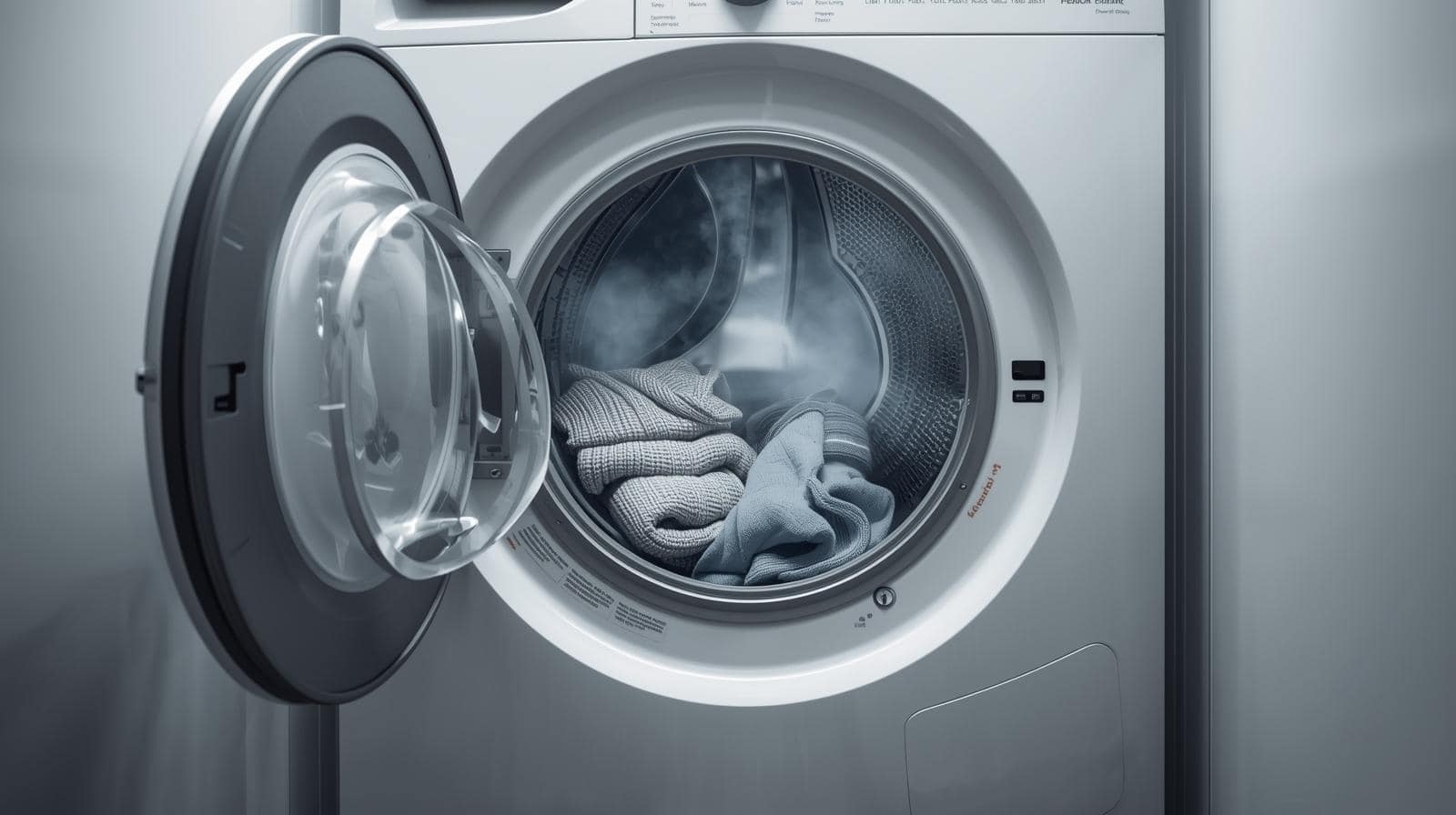
How to Fix It
- Unplug the dryer.
- Pull it away from the wall.
- Remove the vent hose.
- Shake out loose lint.
- Use a dryer vent brush kit to clean deep inside.
- Check the wall vent too.
Pro-Tip: I clean my vent every 6 months. It keeps clothes dry in one cycle.
2. Outside Vent Flap Is Not Opening
Go outside and find the vent cap. When the dryer runs, the flap should open. If it stays closed, moist air stays inside. Rain can also blow in if the flap is broken.
How to Fix It
- Turn on the dryer.
- Watch the vent flap.
- Remove lint or dirt stuck in it.
- Replace it if cracked.
Pro-Tip: I tap the flap lightly in winter. Ice can freeze it shut.
3. Dryer Is in a Cold Garage or Basement
Cold air makes warm dryer air turn into water fast. This is common in winter. The metal duct gets cold.
Then steam turns into water inside the hose.
How to Fix It
- Wrap the vent hose with duct insulation wrap.
- Keep the room a bit warmer if you can.
- Make sure the hose is not too long.
Pro-Tip: Short and straight vent hoses work best. Long bends trap water.
4. Clothes Are Too Wet
If the washer does not spin well, clothes stay very wet. That means more steam in the dryer. Too much steam can form water in the lint trap.
How to Fix It
- Run an extra spin cycle in the washer.
- Do not overload the dryer.
- Dry similar items together.
Pro-Tip: Heavy towels need their own load. Mixing them with light clothes slows drying.
5. Crushed or Bent Vent Hose
If the hose is bent behind the dryer, air can’t move well.
Poor airflow leads to water build-up.
How to Fix It
- Pull the dryer out.
- Check for tight bends.
- Replace soft foil hoses with rigid metal ducts.
Rigid ducts last longer and move air better.
Pro-Tip: I always leave 4–6 inches of space behind the dryer.
Step-by-Step Full Check (Fast Guide)
Follow this order:
- Unplug dryer.
- Clean the lint screen well.
- Remove and clean vent hose.
- Check outside vent flap.
- Look for bends or crush spots.
- Test with a small load.
If air blows strong outside, you fixed it.
When to Buy a New Dryer
Most dryers last 10–13 years.
If yours is older and still holds water, it may be time.
Buy a new one if:
- It takes 2–3 cycles to dry.
- You smell mold.
- The drum feels weak or cold.
- Repairs cost more than half a new unit.
Modern dryers from brands like Whirlpool, LG, and Samsung have better airflow. Many models also have moisture sensors.
Energy Star models save power, too.
Pro-Tip: I tell homeowners to fix airflow first. Many dryers work like new after a deep vent clean.