

Cloudy hot water can look scary. You turn on the tap and see white or milky water. You may think it is dirty or not safe. The good news? In most homes, this problem is simple and easy to fix.
I have seen this many times in US homes. Most of the time, it is not a big deal. Let’s break it down in a simple way.
Quick Answer
Cloudy hot water is usually caused by:
- Air bubbles in the water
- Hard water minerals
- Sediment in the water heater tank
- Rust inside old pipes
If the water clears in a few seconds, it is often just air. If it stays cloudy, your water heater may need a flush.
Pro-Tip: Fill a clear glass with hot water. Wait 30 seconds. If it clears from bottom to top, it is just air.
Common Reasons Why Hot Water Is Cloudy
1. Air Bubbles in Hot Water
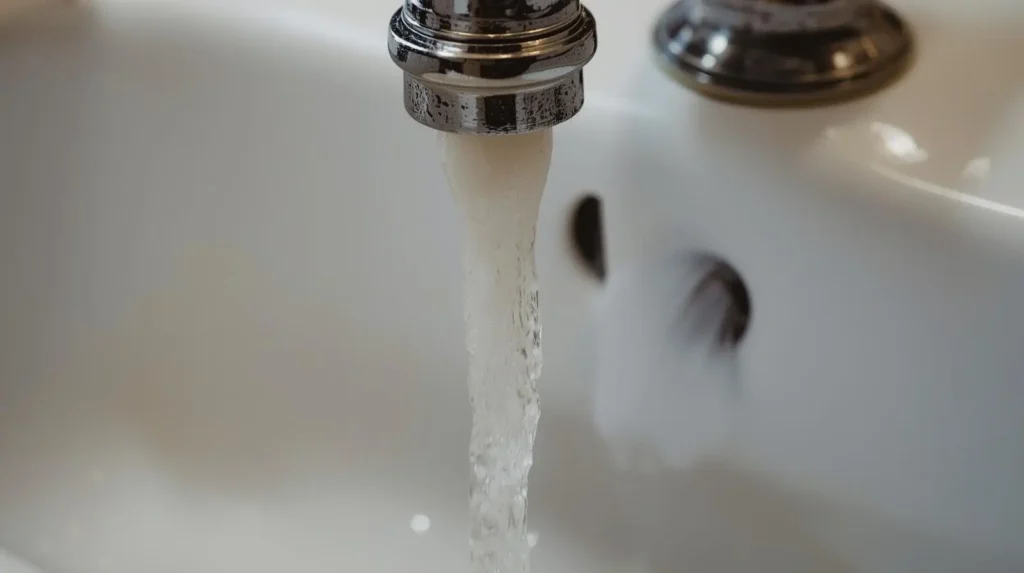
This is the most common reason. Hot water holds less air than cold water. When water heats up, air comes out. That air makes tiny bubbles. These bubbles make the water look white.
The water should clear fast.
How to check:
- Fill a clear glass.
- Watch it for 30–60 seconds.
- See if it clears from the bottom up.
If yes, you are safe.
Pro-Tip: This often happens in winter. Cold outside air means more air in your water lines.

2. Hard Water Minerals
Many US homes have hard water. Hard water has minerals like calcium and lime. When heated, these minerals show up more. They can make water look cloudy.
This cloud does not clear fast.
Signs of hard water:
- White spots on dishes
- Chalk on faucets
- Soap does not foam well
Pro-Tip: If your shower glass gets white marks, hard water is likely the cause.
3. Sediment in the Water Heater
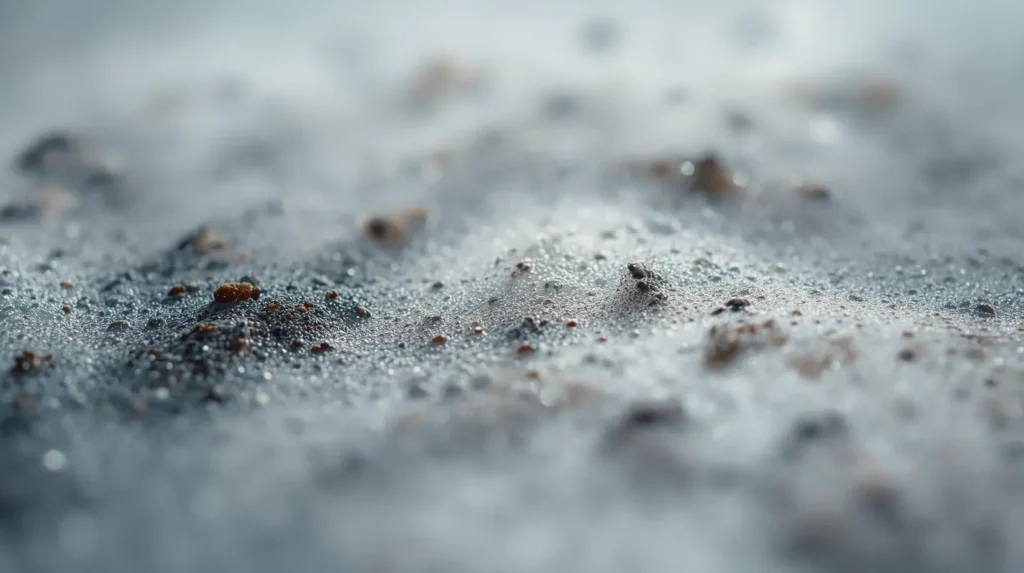
Over time, dirt and minerals sink to the bottom of your water heater tank. This layer is called sediment.
When the tank heats water, the sediment can mix in. That makes hot water look cloudy or dirty.
This is common in homes with older tanks.
Pro-Tip: If you hear popping sounds from the heater, sediment may be thick inside.
4. Rust in Old Pipes
Old pipes can rust inside. Rust can mix with hot water first. Hot water moves faster and breaks loose more rust.
You may see:
- Brown or cloudy water
- Metal smell
- Stains in sinks
This needs quick care.
Pro-Tip: If only hot water is cloudy, the heater may be rusting inside.

Step-by-Step Fix Guide
Here is how I tell homeowners to fix this.
Step 1: Do the Glass Test
- Fill a clear cup with hot water.
- Wait one minute.
- If it clears, no big problem.
If not, go to Step 2.

Step 2: Flush the Water Heater
This clears sediment.
Basic steps:
- Turn off power or gas.
- Turn off cold water supply.
- Connect a hose to the drain valve.
- Drain water into a safe place.
- Turn water back on to flush tank.
If you are not sure, call a plumber.
Pro-Tip: Flush your tank once a year. It helps it last longer.
Step 3: Check for Hard Water
If hard water is the cause:
- Install a water softener
- Use a filter made for hard water
This helps with cloudy water and saves your pipes.
Pro-Tip: A small test kit from a local store can tell you if water is hard.
Step 4: Check for Rust
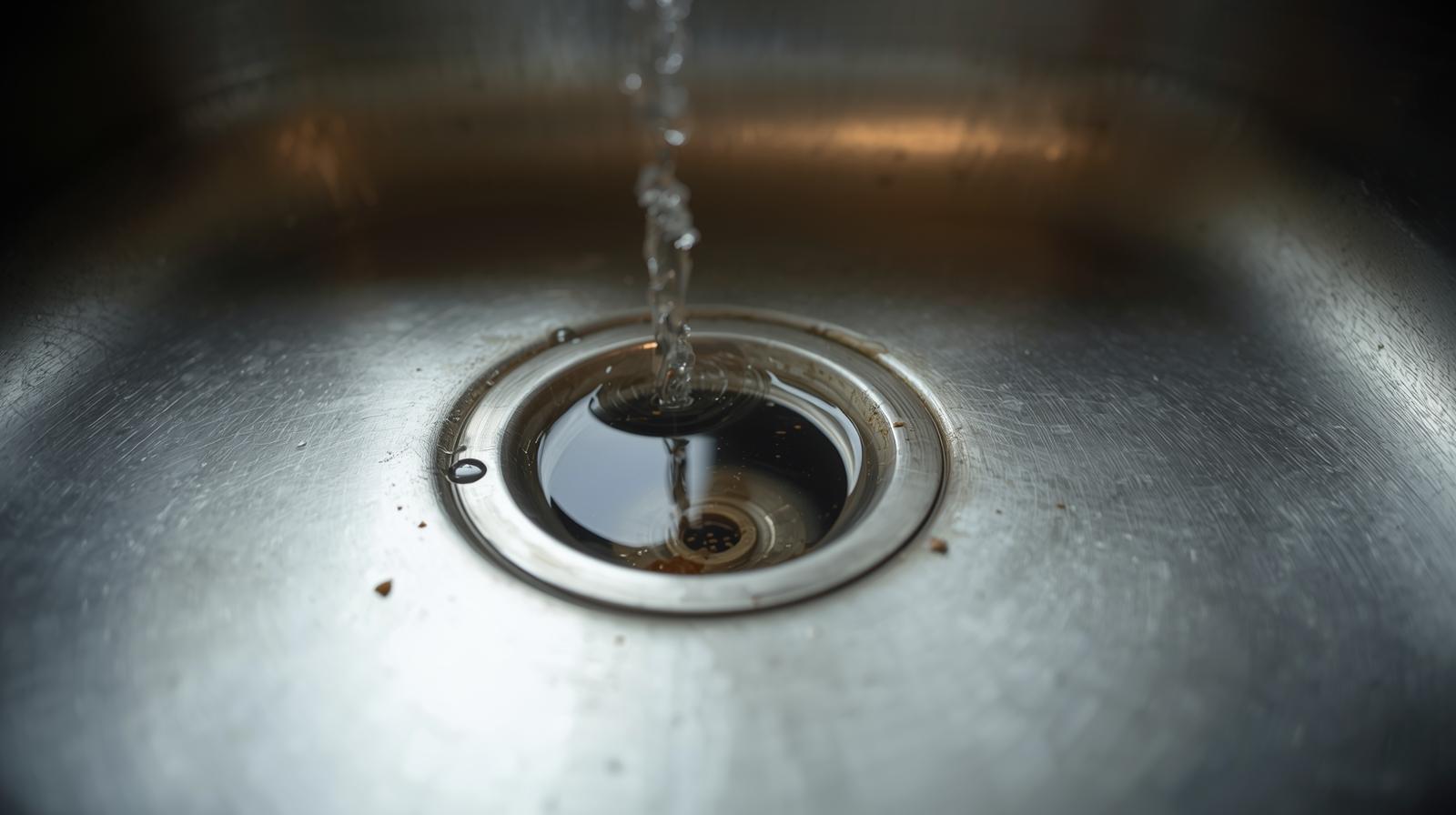
If water looks brown:
- Run hot water for 5 minutes.
- See if color clears.
If not, your heater tank may be rusting inside.
That is not safe long term.

Is Cloudy Hot Water Safe?
If it is just air, yes.
If it smells bad or looks brown, do not drink it. Fix the problem first. Most cloudy water problems are simple. A quick check can save stress.
If you are unsure, a local plumber can test your water in one visit.
I always tell my neighbors this: start small. Test the water. Then move step by step. Most of the time, the fix is easier than you think.