
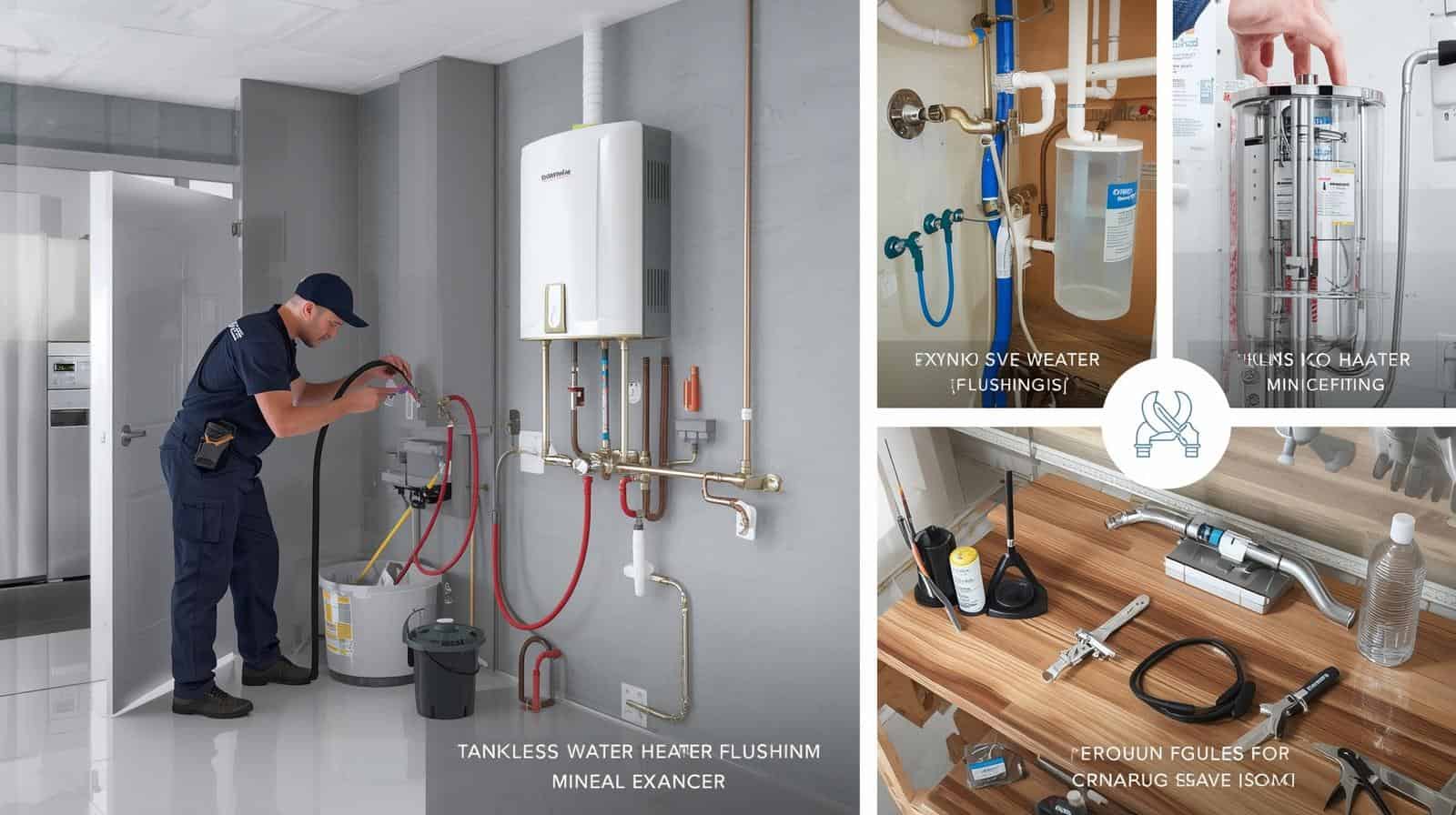
Tankless water heaters are known for their energy efficiency, endless hot water, and compact size. But many homeowners make one costly mistake — they forget maintenance.
Unlike traditional tank heaters, tankless systems rely on a heat exchanger with narrow water channels. Over time, mineral deposits from hard water build up inside those channels, reducing performance and potentially causing expensive failures.
Without routine maintenance, a tankless unit that should last 20+ years might fail in 7–10 years.
This guide explains exactly how to maintain your system, including a DIY flushing process, safety precautions, maintenance schedules, and warning signs of bigger problems.
Key Takeaways (TL;DR)
- Tankless water heaters should be flushed once per year to remove mineral scale.
- Homes with hard water may need maintenance every 6 months.
- The flushing process uses white vinegar, a submersible pump, hoses, and a bucket.
- Regular descaling tankless water heater components prevents efficiency loss.
- Ignoring maintenance can cause error codes, reduced hot water flow, and heat exchanger damage.
- Professional maintenance usually costs $150–$400 depending on the system.
- Proper care can extend water heater longevity to 20 years or more.
Why Tankless Water Heater Maintenance Is Non-Negotiable
Many homeowners assume tankless systems are maintenance-free. That’s a myth.
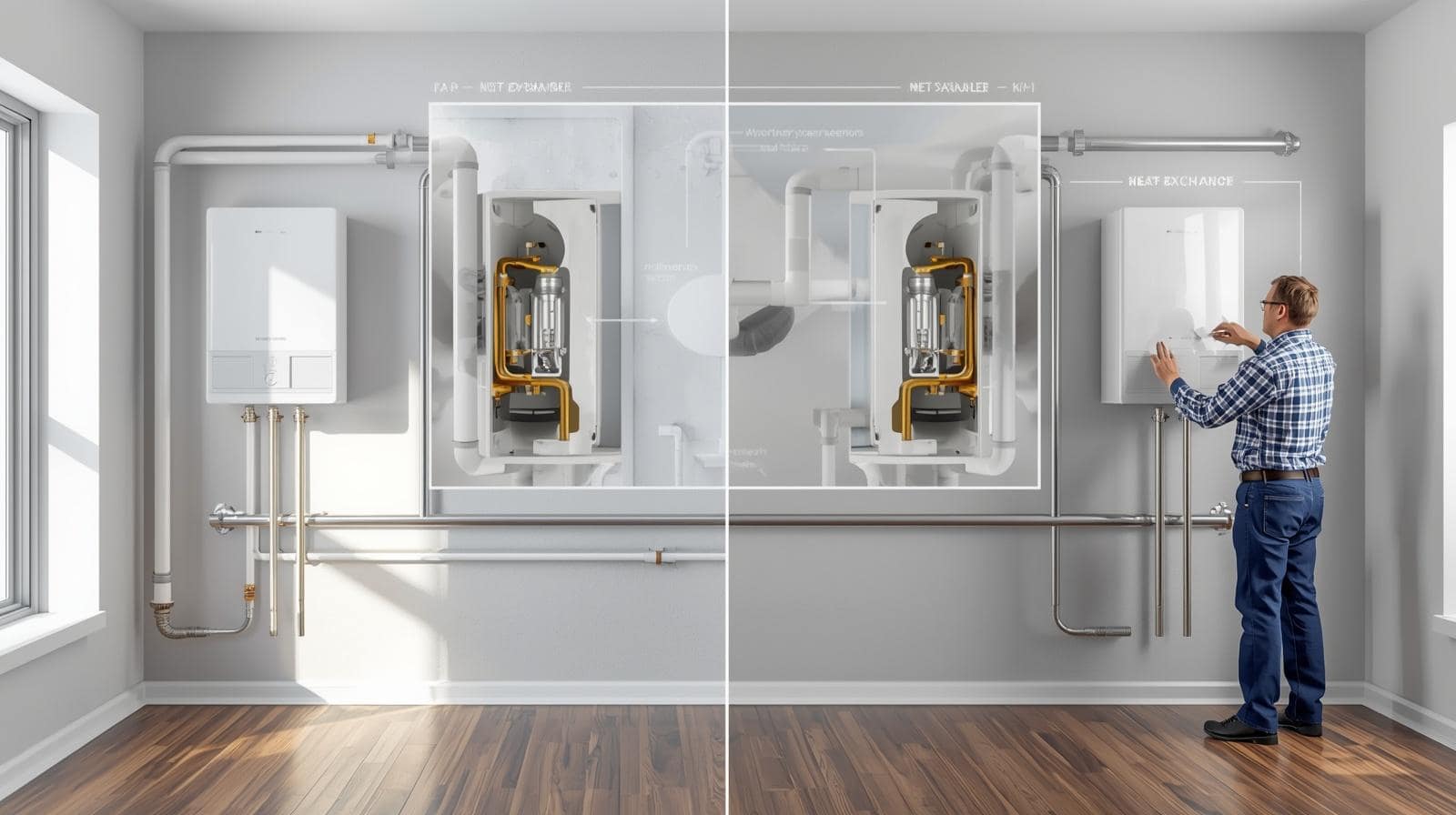
Inside every unit is a heat exchanger, a tightly engineered component where cold water is heated rapidly by gas burners or electric elements.
When minerals accumulate inside the exchanger, they create calcium carbonate (CaCO₃) scale.
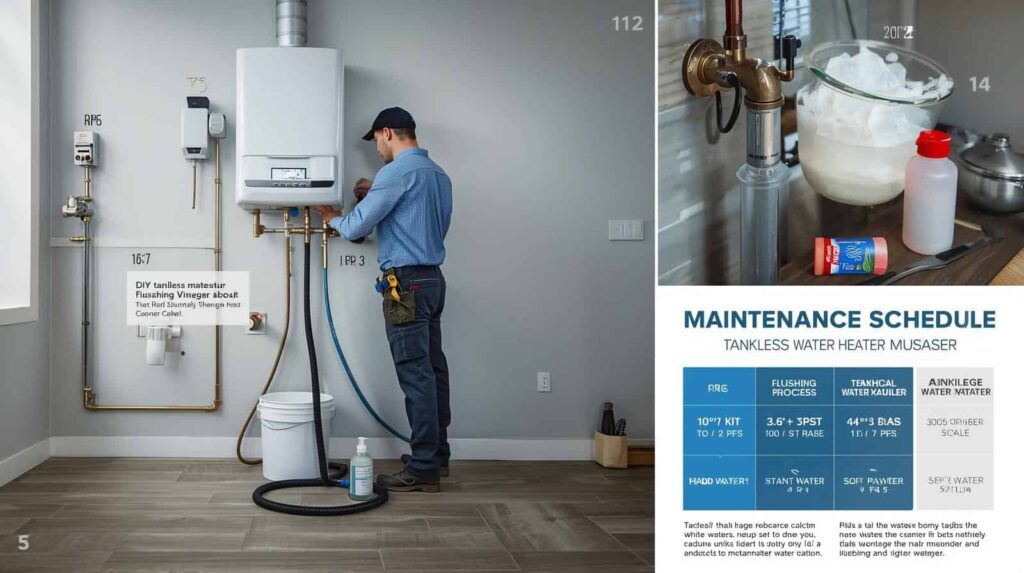
This scale acts like insulation and causes:
- Reduced heating efficiency
- Higher energy bills
- Lower water flow
- Loud rumbling noises
- System overheating
- Premature heat exchanger failure
A neglected tankless unit can lose 15–25% efficiency in only a few years.
Routine maintenance prevents:
- Hard water buildup
- Blocked water passages
- System overheating
- Expensive repairs
It also protects your manufacturer warranty, which often requires annual descaling tankless water heater service.


How Hard Water Destroys Tankless Water Heaters
Hard water contains dissolved minerals such as calcium and magnesium.
When heated, these minerals crystallize into calcium carbonate scale.
Inside a tankless heater, this buildup occurs directly on the heat exchanger walls.
Consequences include:
| Problem | What Happens |
|---|---|
| Reduced efficiency | Heat transfer becomes slower |
| Higher gas or electric use | The unit must work harder |
| Error codes | Sensors detect overheating |
| Restricted flow | Mineral deposits narrow pipes |
| Heat exchanger damage | The most expensive repair |
If your area has hard water, installing a water softener or scale filter can dramatically improve water heater longevity.
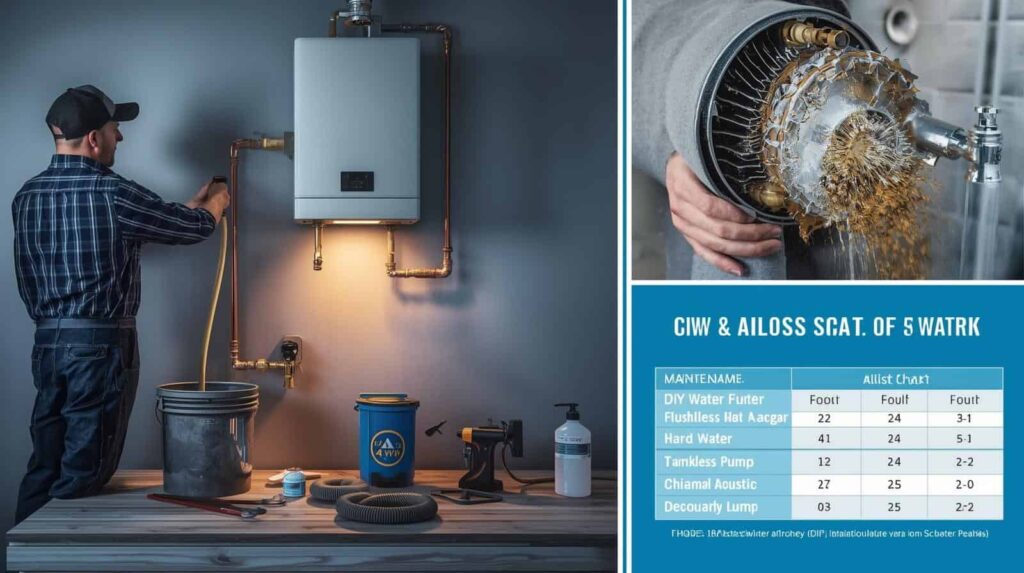
Tankless Water Heater Maintenance Schedule
Proper maintenance frequency depends largely on water hardness.
| Water Condition | Maintenance Frequency |
|---|---|
| Soft water | Once per year |
| Moderate minerals | Every 9–12 months |
| Hard water | Every 6 months |
| Extremely hard water | Every 3–6 months |
Other maintenance tasks should be performed regularly.
Recommended Annual Checklist
| Task | Frequency |
|---|---|
| Flush and descale system | 6–12 months |
| Clean inlet water filter | Every 6 months |
| Inspect venting system | Annually |
| Check gas pressure | Annually |
| Inspect burner and fan | Annually |
Following this schedule significantly improves tankless water heater longevity.
Tools Needed for DIY Tankless Water Heater Flushing
Before starting, gather these items.
Essential Tools
- Tankless flush kit (hoses and pump)
- Submersible utility pump
- 5-gallon bucket
- White vinegar (3–4 gallons)
- Adjustable wrench
- Screwdriver
- Rubber gloves
- Towels
Many homeowners buy a tankless flush kit, which typically includes hoses and a small pump designed for descaling tankless water heater systems.
Safety First: Important Shutdown Steps
Never attempt maintenance without properly shutting down the system.
Step 1: Turn Off Power
- Electric units: turn off the breaker
- Gas units: power down the control panel
Step 2: Shut Off Gas Supply
Close the gas shutoff valve if your heater is gas-powered.
Step 3: Turn Off Water Supply
Close both:
- Cold water inlet valve
- Hot water outlet valve
Step 4: Allow the Unit to Cool
Wait 10–15 minutes before opening service valves.
This prevents burns from hot water inside the heat exchanger.
Step-by-Step Guide: How to Flush a Tankless Water Heater
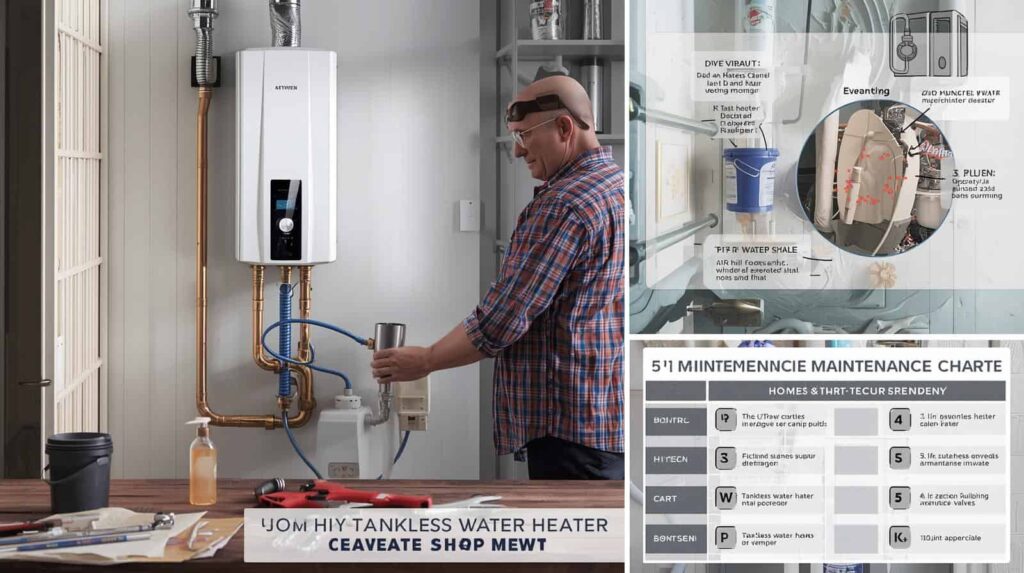
Flushing removes mineral scale from the heat exchanger and internal pipes.
Follow these steps carefully.
Step 1: Close Isolation Valves
- Most modern tankless systems include service isolation valves.
- Turn both valves perpendicular to the pipe to close them.
- This isolates the heater from your home’s plumbing.
Step 2: Connect the Flush Kit Hoses
Attach hoses from your flush kit:
- One hose to the cold service valve
- One hose to the hot service valve
Place the other ends into your 5-gallon bucket.
Step 3: Add Vinegar to the Bucket
- Pour 3–4 gallons of white vinegar into the bucket.
- Vinegar dissolves mineral scale safely without damaging internal components.
- It’s widely recommended for descaling tankless water heater systems.
Step 4: Place the Submersible Pump
- Put the submersible pump inside the vinegar bucket.
- Attach the pump hose to the cold water service port.
Step 5: Start Circulating the Vinegar
- Turn on the pump.
- The vinegar will circulate through the heat exchanger, breaking down scale deposits.
- Allow the system to circulate for:
- 45–60 minutes
- You may notice cloudy or discolored liquid as minerals dissolve.
Step 6: Rinse the System
After descaling:
- Turn off the pump
- Remove hoses
- Open the cold water supply valve briefly
Flush clean water through the heater for 5 minutes.
This removes leftover vinegar and mineral debris.
Step 7: Restore the System
Finally:
- Close service valves
- Open hot and cold water isolation valves
- Restore power and gas
- Run a hot water faucet to purge air
Your system is now flushed and ready to run efficiently again.
Signs Your Tankless Water Heater Needs Maintenance
If you skipped maintenance, your unit may show warning signs.
Watch for these symptoms.
Reduced Hot Water Flow
Mineral buildup can restrict water movement through the heat exchanger.
Temperature Fluctuations
Hot water suddenly turning cold often indicates scale interference.
Strange Noises
Rumbling or clicking sounds can mean mineral deposits are overheating.
Error Codes on the Display
Modern tankless heaters display error codes when something goes wrong.
Common Tankless Water Heater Error Codes
| Error Code | Meaning | Possible Cause |
|---|---|---|
| 11 | Ignition failure | Gas supply issue |
| 12 | Flame failure | Burner or gas pressure problem |
| 16 | Overheat warning | Scale buildup in heat exchanger |
| 29 | Condensate blockage | Drain clog |
| 61 | Fan motor failure | Ventilation issue |
If these codes persist after descaling tankless water heater components, professional service may be needed.
DIY Maintenance vs Professional Service
Some tasks are homeowner-friendly. Others require specialized tools.
DIY Maintenance
You can safely:
- Flush the system
- Clean the inlet filter
- Inspect valves
- Check visible leaks
Professional Maintenance
A plumber should handle:
- Gas pressure testing
- Burner cleaning
- Fan inspection
- Heat exchanger inspection
- Advanced error code diagnostics
These inspections require specialized gauges and combustion testing tools.
How Much Does Professional Tankless Maintenance Cost?
The average cost varies by region and system size.
| Service | Typical Cost |
|---|---|
| Basic flushing | $150–$250 |
| Full maintenance service | $250–$400 |
| Hard water descaling service | $300–$500 |
While this might seem expensive, it’s far cheaper than replacing a damaged heat exchanger, which can cost $900–$1,500.
Improving Tankless Water Heater Longevity
Regular flushing is only part of the solution.
You can extend system lifespan with a few upgrades.
Install a Water Softener
Softening water reduces mineral deposits dramatically.
Use a Scale Filter
Inline filters capture minerals before they reach the heater.
Install a Sediment Filter
Sediment filters remove sand and debris from the supply line.
Schedule Annual Inspections
Professional inspections help catch problems early.
With proper care, many tankless units last 20 years or longer.
Tankless Water Heater Maintenance FAQ
Most plumbers charge $150–$400 depending on the complexity of the system and the level of service. A basic flush is cheaper, while a full inspection that includes burner cleaning and gas pressure testing costs more.
CLR can remove scale quickly, but it is not always recommended by manufacturers. Some chemical descalers may damage rubber seals or internal components.
White vinegar is safer because it is:
Non-toxic
Inexpensive
Manufacturer approved for most systems
Always check your unit’s manual before using chemical cleaners.
With proper maintenance, most units last 15–20 years. Without regular flushing, hard water buildup can shorten lifespan to under 10 years.
Yes. Even though they don’t use gas burners, mineral scale still forms on heating elements and internal pipes, so periodic flushing is still required.
Final Thoughts
Tankless systems are one of the best upgrades a homeowner can make — but only if they’re maintained properly.
Routine maintenance prevents:
- Hard water buildup
- Heat exchanger damage
- System inefficiency
- Costly repairs
The simple one-hour flushing process described in this guide can add years of life to your system.
Whether you do it yourself with a flush kit and vinegar or hire a professional plumber, regular descaling tankless water heater systems is essential for keeping your home’s hot water flowing reliably.