
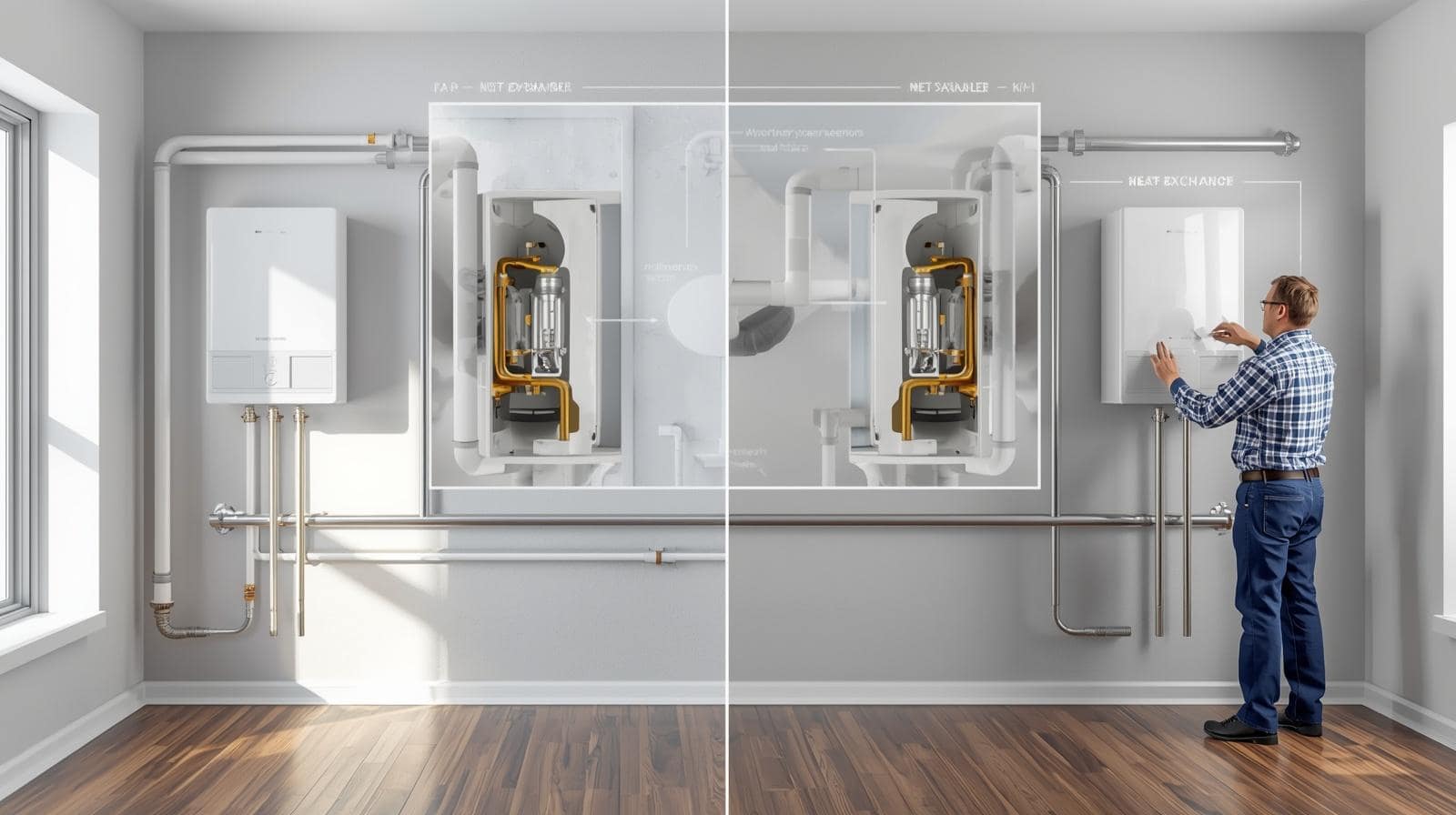
Condensing vs non condensing tankless water heater mainly comes down to how the heater uses heat.
- Condensing tankless water heaters reuse extra heat from exhaust gas. This makes them more energy efficient and cooler to vent.
- Non-condensing tankless water heaters send hot exhaust out right away. They cost less but waste some heat.
Condensing models save more energy. Non-condensing models cost less upfront and are easier to install.
Yesterday I Saw a Heater Problem That Proved This Difference
Yesterday, I saw a heater in a small home in Ohio. The owner said, “My gas bill keeps going up.” Sound familiar?
When I opened the unit, I saw an old non-condensing tankless water heater. It still worked fine. But it was letting a lot of heat escape through the vent.
I told the homeowner about the condensing vs non condensing tankless water heater difference. He had never heard of it before.
Once I showed him how condensing units reuse heat, it finally made sense why some homes save more on energy.
What Is a Non-Condensing Tankless Water Heater?
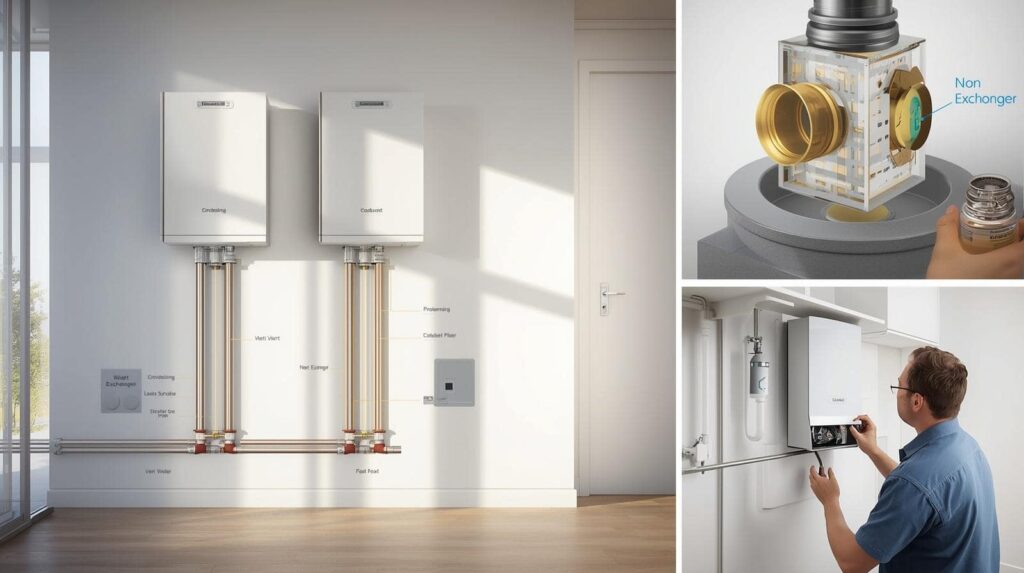
A non-condensing tankless water heater uses a simple design.
It has one heat exchanger.
Here is what happens:
- Gas burner heats the metal exchanger
- Water flows through the exchanger
- Hot exhaust gas leaves through the vent
The catch is this: the exhaust gas is still very hot.
That means some heat energy is lost.
Because of this heat, the unit must use metal vent pipes.
Why Some Homes Still Use It
Many homes choose non-condensing units because:
- Lower purchase cost
- Smaller size
- Simple design
- Easy replacement
Pro-Tip:
If your house already has metal vent pipes from an old tankless heater, replacing it with another non-condensing model is often cheaper.
What Is a Condensing Tankless Water Heater?
A condensing tankless water heater is more advanced.
Instead of wasting heat, it captures it and uses it again.
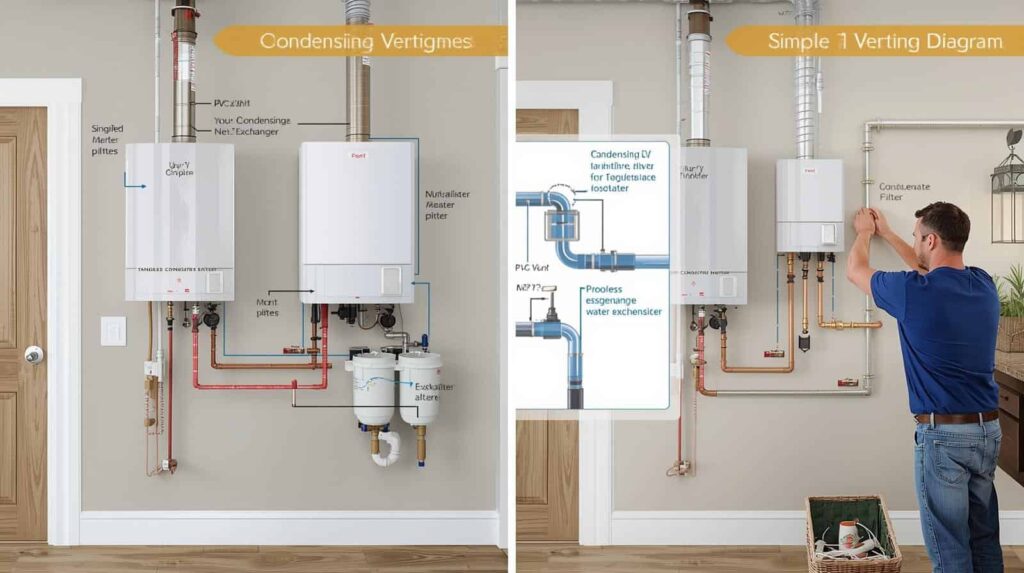
It does this with two heat exchangers.
Here is how it works:
- The first exchanger heats the water
- Exhaust gas moves to a second exchanger
- That extra heat warms the incoming cold water
Now the heater uses almost every bit of heat from the gas.
Because the exhaust becomes cooler, the heater can use PVC vent pipes.
Why Homeowners Like It
Condensing models offer:
- Higher energy savings
- Lower gas bills
- Higher hot water output
- Flexible vent pipe options
Pro-Tip:
If you are building a new home, I almost always suggest a condensing heater. It is easier to install the drain line during new construction.
Main Difference: Condensing vs Non-Condensing Tankless Water Heater
Here is the simple comparison I show my customers.
| Feature | Condensing Heater | Non-Condensing Heater |
|---|---|---|
| Heat exchangers | Two | One |
| Energy use | Very efficient | Moderate |
| Exhaust heat | Cooler | Very hot |
| Vent pipe | PVC or plastic | Metal |
| Condensate drain | Required | Not needed |
| Upfront cost | Higher | Lower |
Pro-Tip:
Think of condensing heaters like a hybrid car. They reuse energy instead of wasting it.
Venting and Installation Differences
Venting is where many installs get tricky.
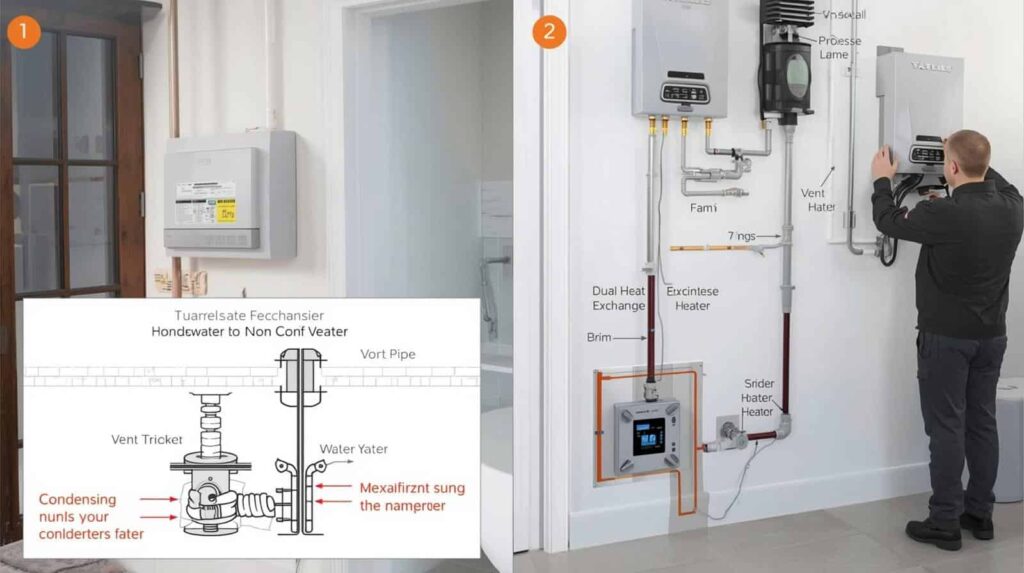
Non-condensing heaters release very hot exhaust gas. Because of that, they must use stainless steel or metal vent pipes.
Condensing heaters cool the exhaust first. That means they can use PVC or plastic vent pipes.
This often makes installation easier.
But there is one extra step.
Condensing units create water from the cooling process. This water must drain through a small pipe called a condensate drain line.
Pro-Tip:
Always install a condensate neutralizer if you have a condensing heater. It protects your home’s drain pipes.
Safety First
Gas appliances always need care.
Before working on a tankless heater:
- Turn off the gas valve
- Shut off water supply
- Disconnect power
Never block the exhaust vent. Poor venting can cause dangerous gas buildup.
If you smell gas, leave the house and call a professional right away.
Pro-Tip:
I always suggest a carbon monoxide detector near water heaters.
Quick Summary
Here is the simple truth about condensing vs non condensing tankless water heater systems.
- Condensing units reuse heat and save energy
- Non-condensing units cost less upfront
- Condensing heaters need a drain line
- Non-condensing heaters need metal vent pipes
Both give endless hot water. The best choice depends on your home setup and budget.
FAQ
Condensing heaters are usually better for energy savings. They reuse heat that non-condensing heaters waste.
Yes. Many homeowners see lower gas bills because condensing units use heat more efficiently.
They cool exhaust gas, which creates water. This water must drain through a small condensate pipe.
Yes. Many people upgrade. The installer will just need to add a condensate drain line.
Most tankless heaters last 15 to 20 years with proper yearly maintenance.