
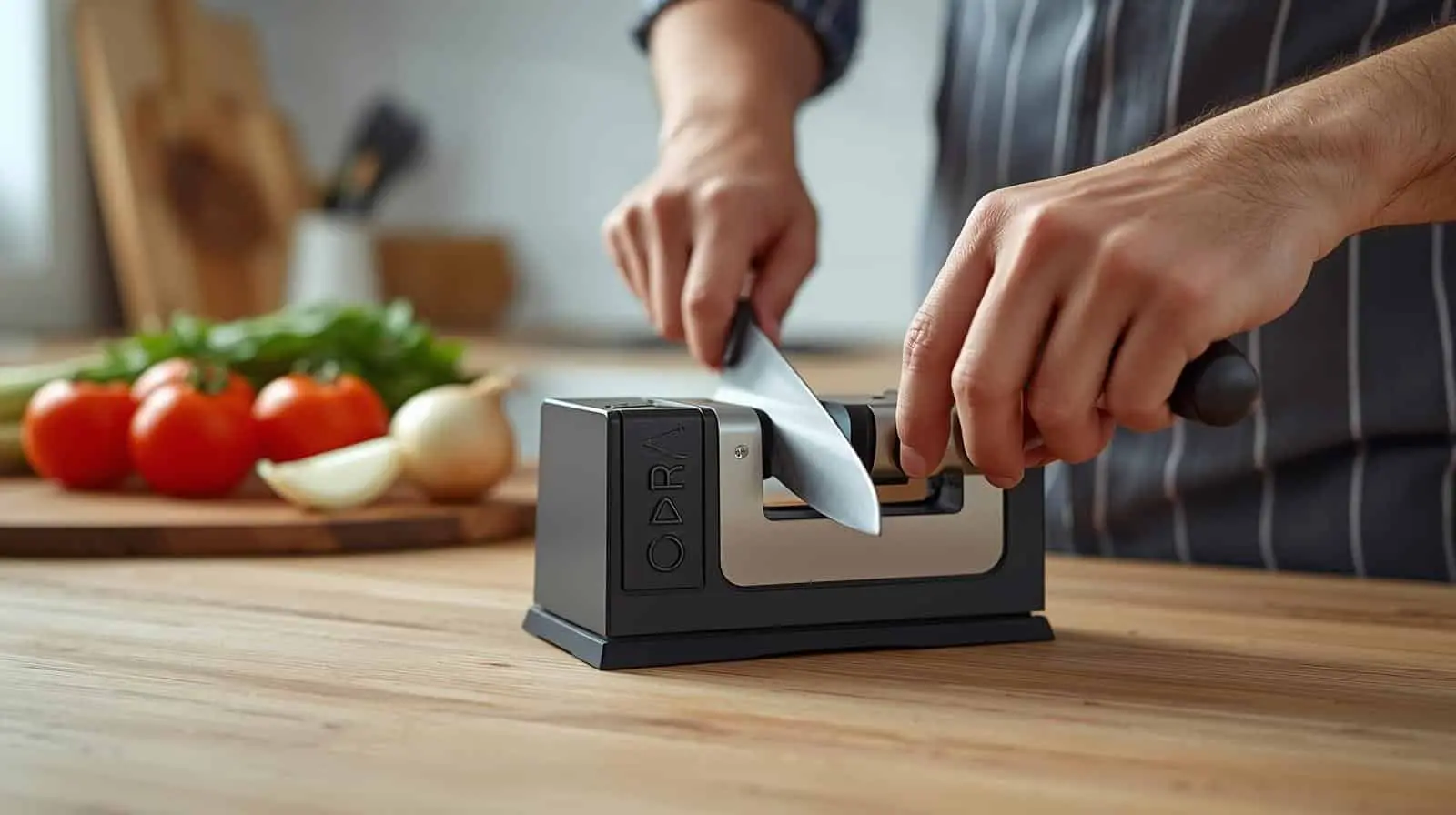
I saw a dull knife in my own kitchen that could barely cut a tomato. I picked it up, tried to slice an onion… and the blade just slid around. Not good. That moment reminded me why how to sharpen kitchen knives is such an important skill for any home cook.
A dull knife slows you down. It also makes cooking less safe. Strange, right? Most people think sharp knives are dangerous. The truth is the opposite. A dull blade slips. A sharp one cuts clean.
So if you’ve been wondering how to sharpen kitchen knives, you’re in the right place. I’ve been fixing tools and kitchen gear for 15 years, and I’ll show you the simple way I do it at home.
Let’s get that blade sharp again.
Why Your Kitchen Knife Gets Dull
Kitchen knives work hard. Every cut slowly wears down the edge.
Here are the usual causes:
- Cutting on hard boards
- Washing knives in the dishwasher
- Dropping the knife
- Using it every day
Have you ever noticed your knife crushing food instead of slicing it? Sound familiar? That’s the first sign the blade needs work.
Pro Tip: Use a wood or plastic cutting board. Glass boards ruin knife edges fast.
The Simple Tool You Need
You don’t need fancy gear. Most homes only need one simple tool.
Here are the common knife sharpening tools:
- Whetstone
- Manual knife sharpener
- Honing rod
- Electric knife sharpener
For beginners, I like a manual knife sharpener. It’s easy and fast.
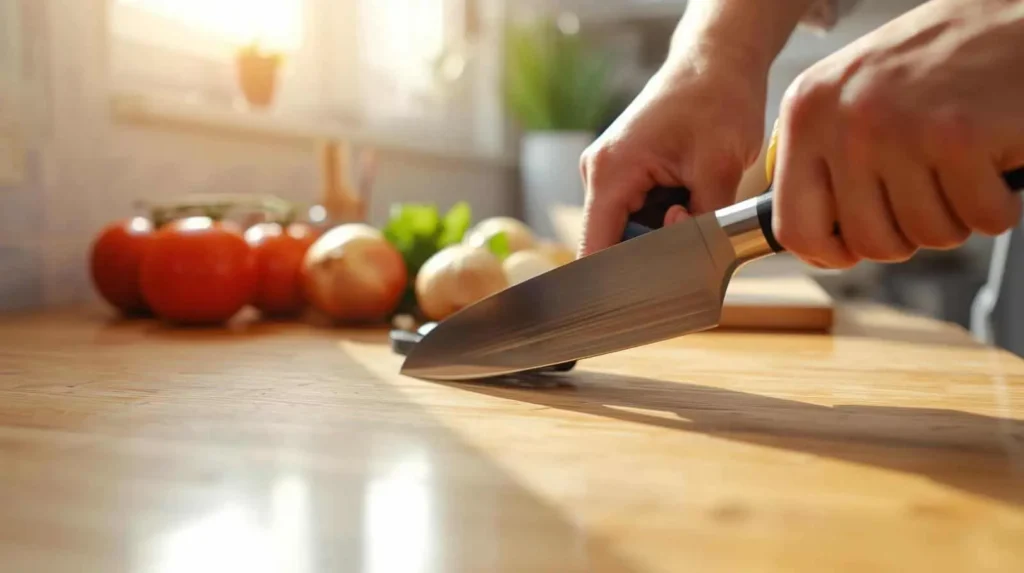
If you’re learning how to sharpen kitchen knives, this tool keeps things simple.
Pro Tip: Keep your sharpener in the same drawer as your knives. You’ll remember to use it more often.
Step-by-Step: How to Sharpen Kitchen Knives
Now let me show you the method I use in my own kitchen.
Step 1: Clean the Knife
- First, wash and dry the knife. Grease and food bits can block the blade.
- A clean knife sharpens better.
Pro Tip: Dry the knife fully so it doesn’t slip.
Step 2: Place the Sharpener on the Counter
- Set the sharpener on a flat surface.
- Hold it with one hand so it doesn’t move.
- You want the tool steady.
Pro Tip: Put a damp towel under the sharpener. It stops sliding.
Step 3: Pull the Knife Through
- Place the blade in the first slot.
- Now pull the knife toward you slowly. Not fast. Nice and smooth.
- Do this about 4–6 times.
- Most sharpeners have two slots:
- First slot: rough sharpen
- Second slot: smooth finish
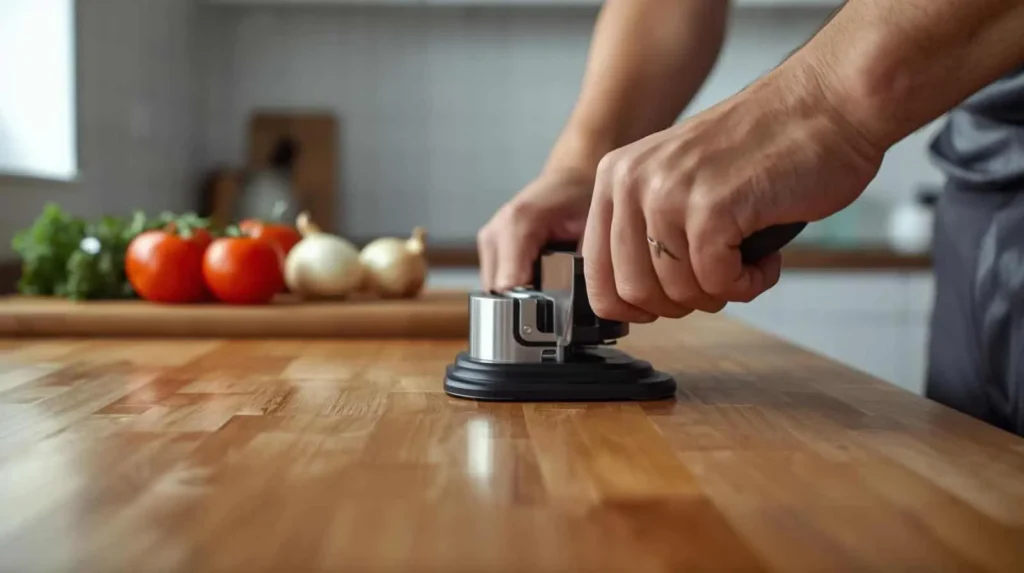
This is the key step in how to sharpen kitchen knives the right way.
Pro Tip: Always pull the blade one way. Never push it back and forth.

Step 4: Test the Sharpness
- Now grab a tomato or a sheet of paper.
- Try a light slice.
- If the knife cuts clean with no force, you’re done.
- Still dull? Run it through the fine slot two more times.
- That’s usually all it takes.
Pro Tip: Paper is the fastest test. A sharp knife glides right through.
Safety First
Sharp tools need care.
Here are a few safety tips I always tell homeowners:
- Keep fingers away from the blade edge
- Pull the knife slowly when sharpening
- Store knives in a block or rack
- Never leave knives loose in a drawer
A sharp knife is safe when you respect it.
Pro Tip: I keep a magnetic knife strip on my wall. It keeps blades safe and easy to grab.
How Often Should You Sharpen?
Most home cooks don’t need to sharpen often.
Here’s a good rule:
- Hone the knife weekly
- Sharpen every 2–3 months
If you cook a lot, maybe once a month.
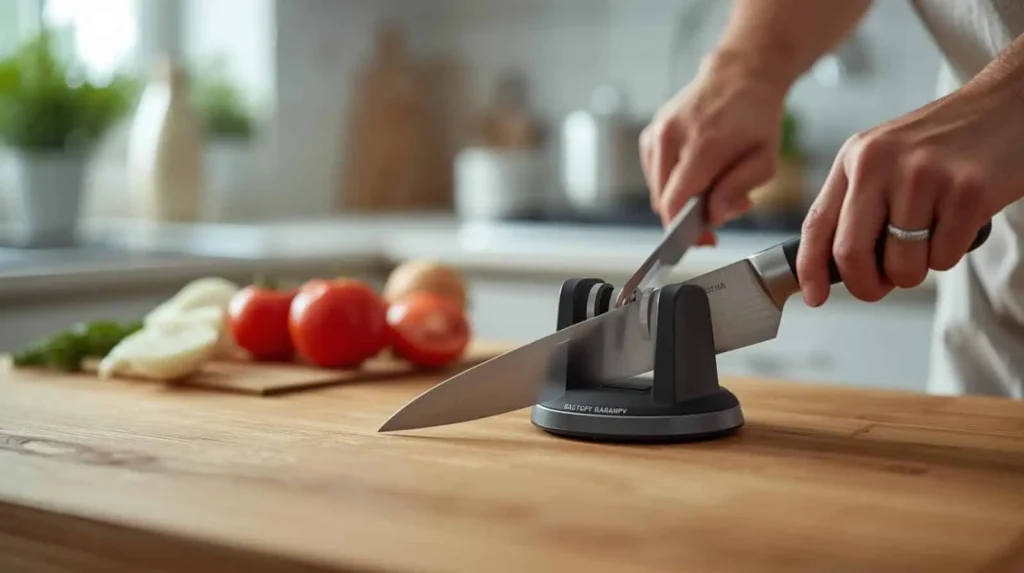
When you know how to sharpen kitchen knives, keeping them sharp takes less than two minutes.
Pro Tip: A quick hone before cooking keeps knives sharp longer.

Quick Summary
Let’s keep it simple.
Here’s the fast version of how to sharpen kitchen knives:
- Clean and dry the knife
- Place sharpener on a flat counter
- Pull knife through sharpening slot
- Use the fine slot to finish
- Test with paper or a tomato
That’s it.
A sharp knife makes cooking faster, safer, and way more fun.
And once you learn how to sharpen kitchen knives, you’ll never struggle with dull blades again.
Trust me. Your onions will thank you.