

I saw a fine layer of dust on a shelf I had wiped the day before. That kind of thing bugs me. A client once asked me, “Do these air cleaners really do much, or are they just fancy fans?” Fair question. So I set one up in a small room, let it run, and checked the filter a few weeks later. It was packed with dust, lint, and pet hair. That’s when it clicks for most folks: how do air purifiers work? They pull in dirty air, trap the bad stuff in filters, and push cleaner air back out. Simple idea. Big help.
If you’ve got dust, pet hair, smoke smell, or spring sniffles, this guide will walk you through it in plain English.
The Basic Way an Air Purifier Works
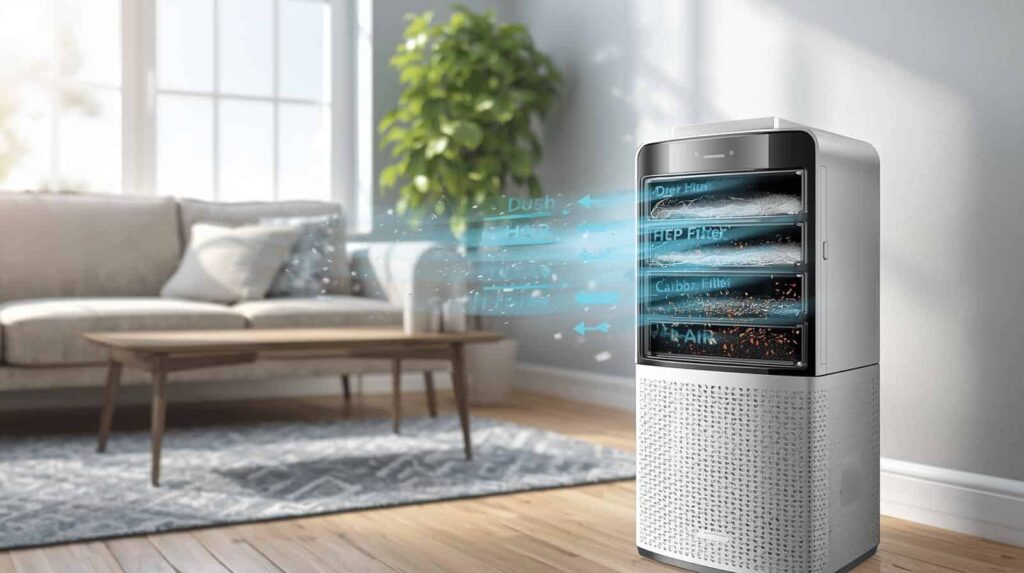
An air purifier uses a fan to pull air into the unit. That air moves through one or more filters. Each filter grabs a different kind of mess. Then the unit sends the cleaned air back into the room.
That’s the whole job.
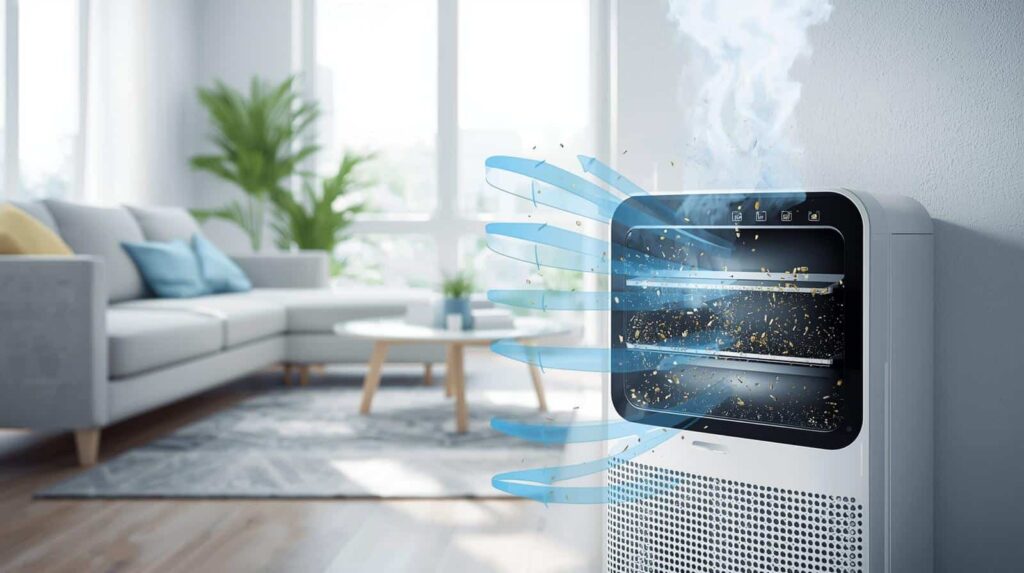
Most units pull air in from the back or sides and blow clean air out from the top. That air flow helps mix the room air, which is how the unit keeps cleaning over time.
Pro tip: Give the unit a little space on all sides. If you shove it tight to a wall or couch, it can’t pull air in well.

Step 1: The Pre-Filter Catches Big Stuff
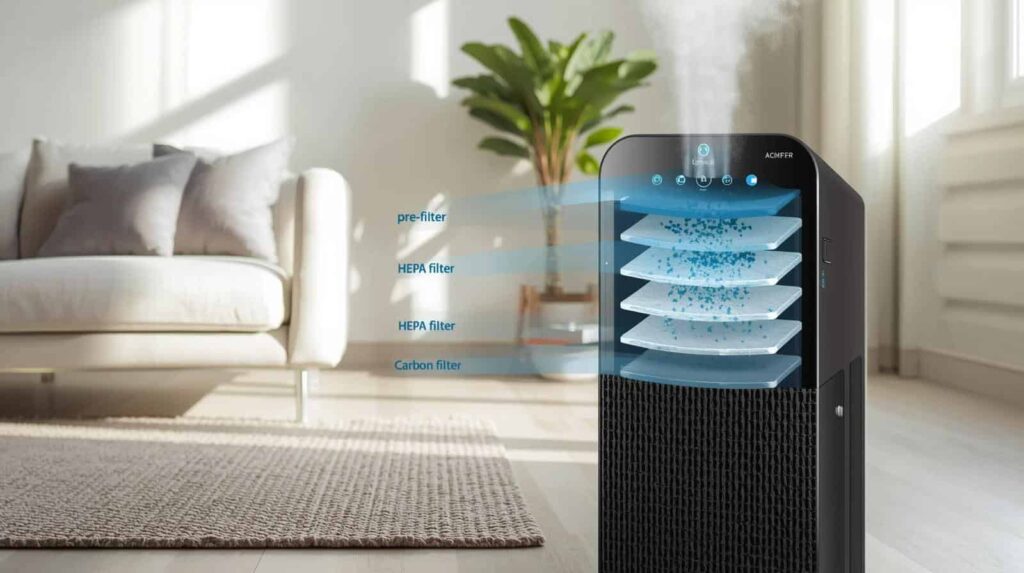
The first stop is the pre-filter. This part grabs the large bits:
- Dust
- Hair
- Lint
- Pet fur
This helps the other filters last longer. Think of it like the first gate.
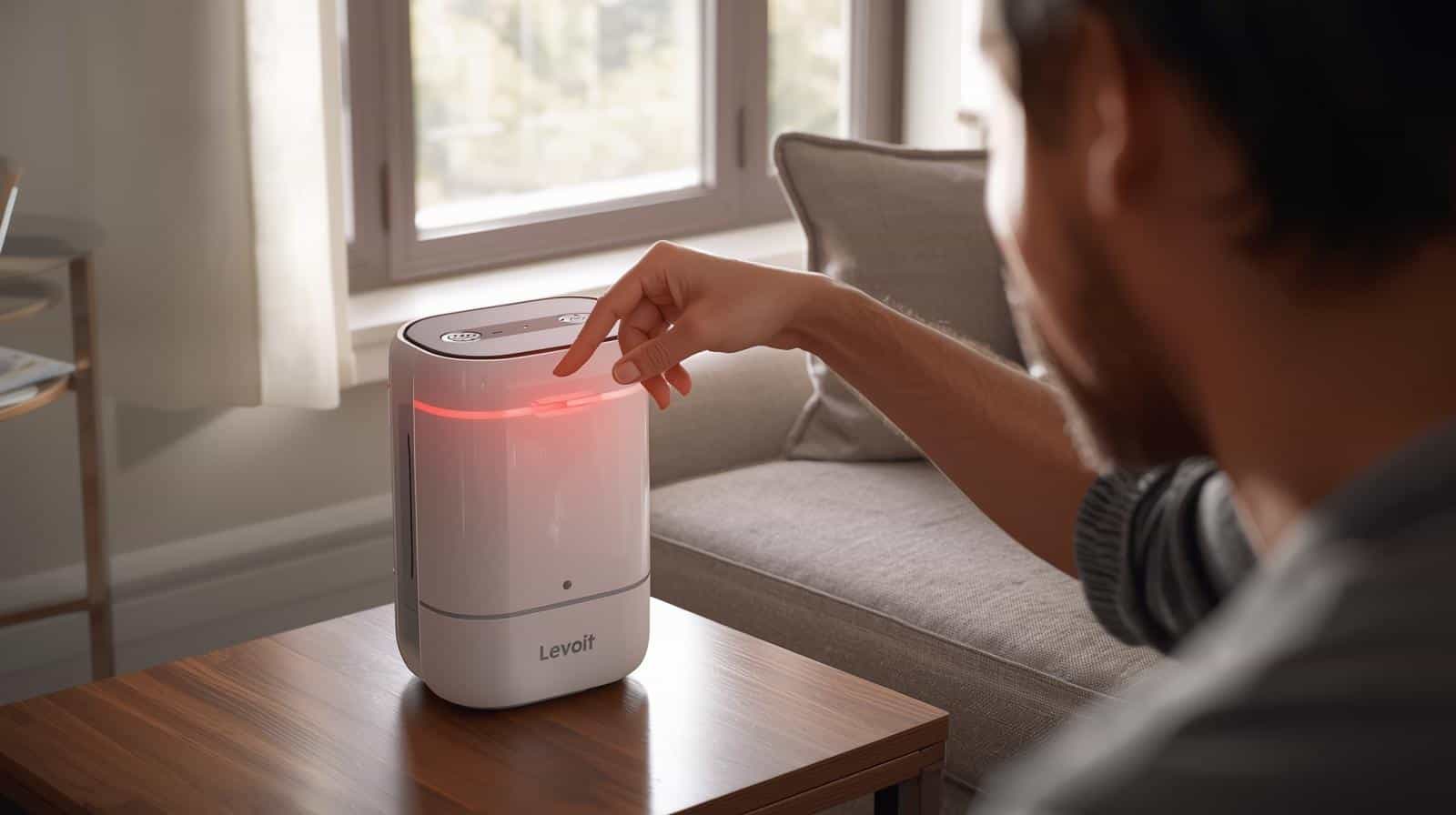
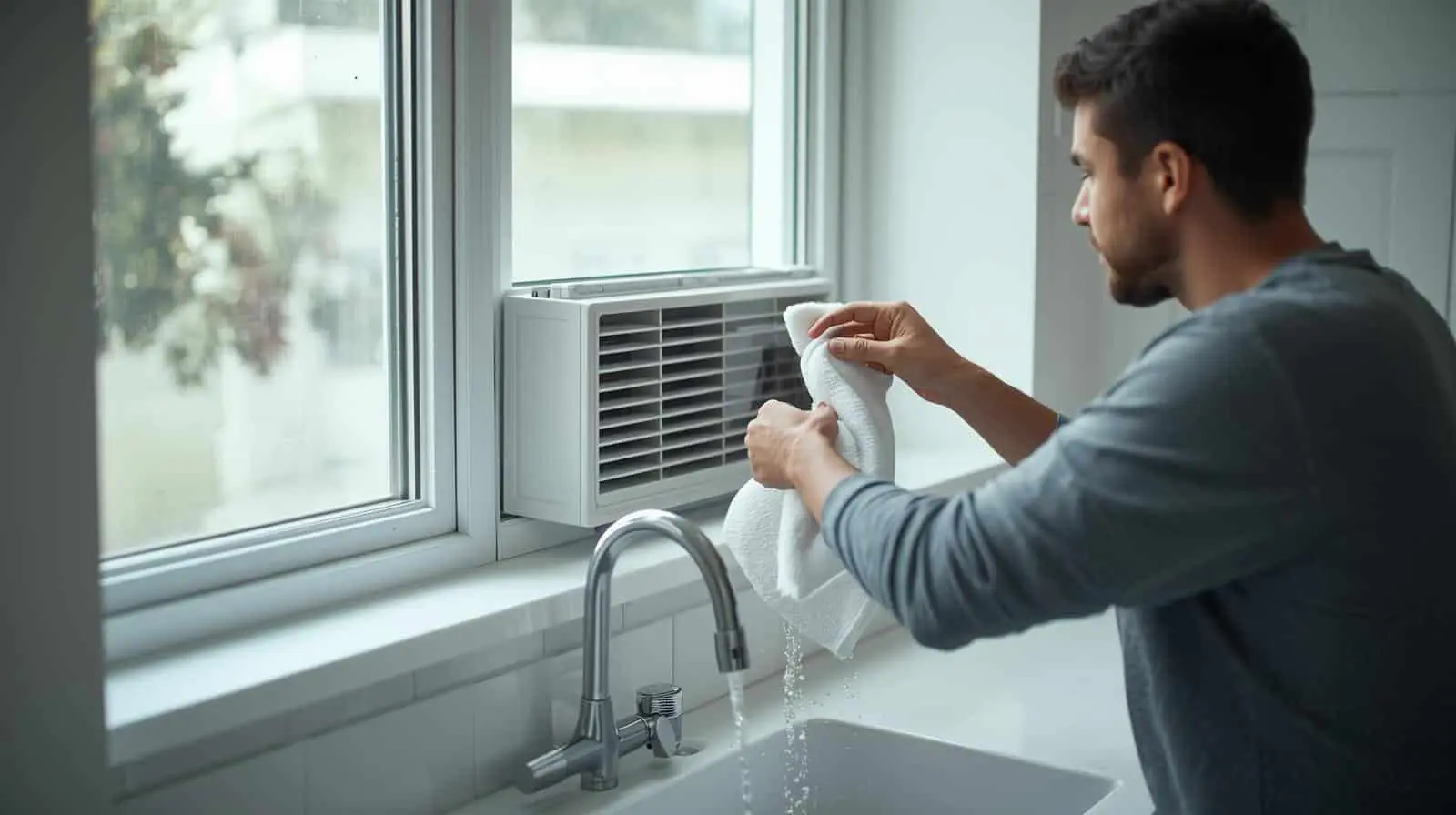
Some pre-filters can be washed. Some need to be cleaned by hand with a soft brush or a vacuum.
Pro tip: Check the pre-filter once a month. A dirty pre-filter can slow the whole unit down.
Step 2: The HEPA Filter Traps Tiny Bits
This is the part most people care about. A HEPA filter is made to catch very small bits in the air, like:
- Fine dust
- Pollen
- Pet dander
- Mold bits
- Some smoke particles
So when people ask me how do air purifiers work, this is the main thing I point to. The fan moves the air, but the HEPA filter does the hard work.
A good HEPA air purifier can help a lot if you wake up stuffy or keep sneezing in one room.
Pro tip: A HEPA filter helps most when doors and windows stay shut. Open air keeps bringing new dust and pollen in.
Step 3: The Carbon Filter Helps With Smells
If your room smells like pets, smoke, food, or paint, a carbon filter can help. This filter does not work the same way as a HEPA filter. It is made to grab odors, smoke smell, and some gas in the air.
That means a unit with both a HEPA filter and a carbon filter is often the best pick for a home.
This is one of the most missed parts when folks shop. They buy a unit for smell, but the unit has no real carbon layer.
Pro tip: If smell is your main issue, look for “activated carbon” in the specs, not just “odor filter.”
Step 4: The Fan Keeps Air Moving
No fan, no clean air. The fan pulls air through the filters and keeps the room air moving. A better fan can clean the room faster and more evenly.
This is why room size matters. A small unit in a big room may run all day and still not do much.
Look at the room size on the box. Match it to your real room, not your whole floor.
Pro tip: Put the unit where air can move well, not behind a chair, bed, or drape.
What Air Purifiers Can and Can’t Do
Let’s keep this real.
Air purifiers can help with:
- Dust
- Pollen
- Pet dander
- Smoke particles
- Some smells
They can’t fix:
- Dust stuck on rugs and chairs
- Mold growing on walls
- Bad air flow in the whole house
- A dirty HVAC filter
- Strong gas leaks
So yes, air purifiers work, but they work best as part of a clean home plan.
Pro tip: Use the unit with basic cleaning. Dust less often, vacuum with a good filter, and change your HVAC filter on time.
Safety First
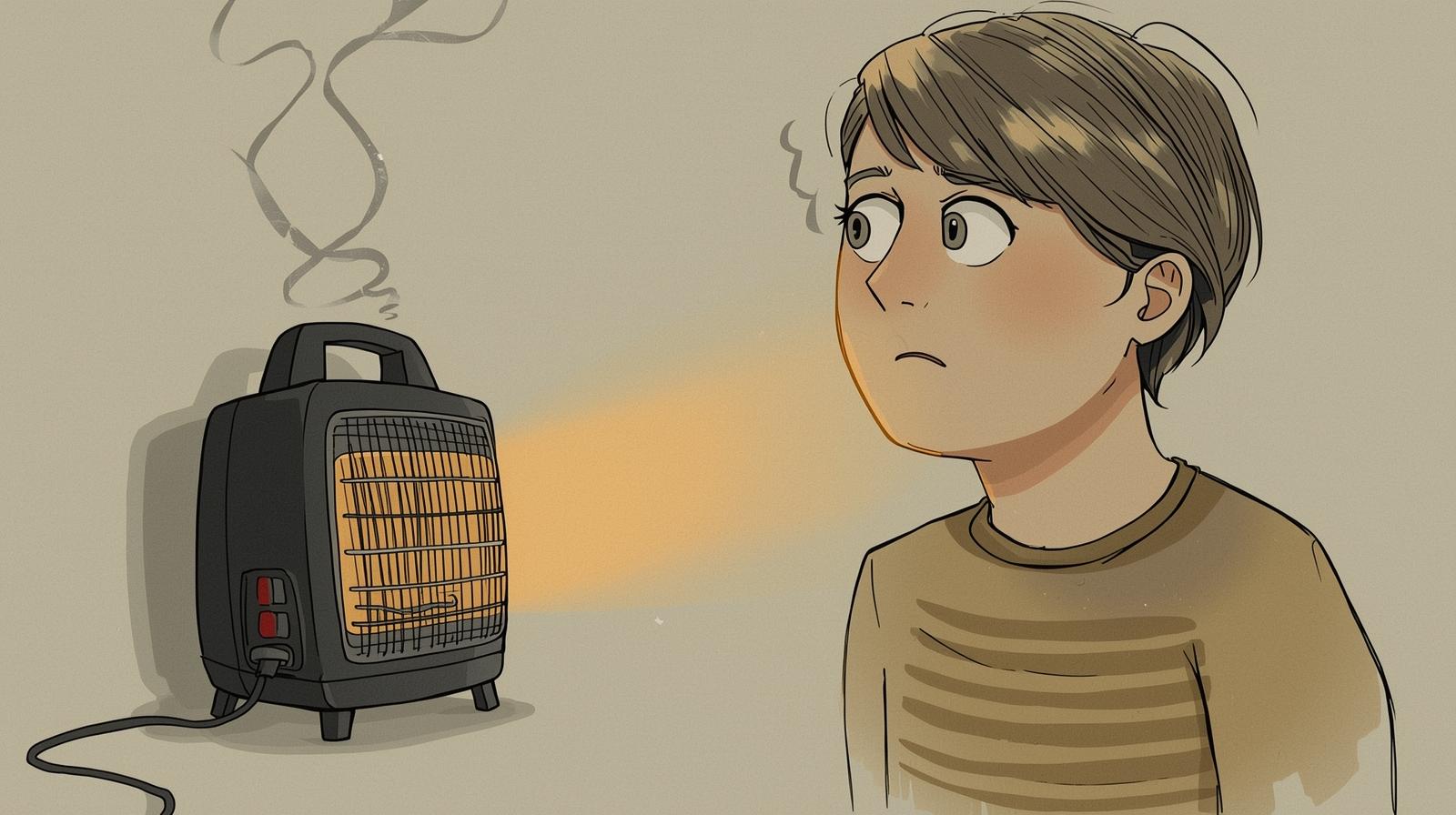
Always use the unit as the maker says. Don’t block the air vents. Don’t run a unit with a torn cord. Keep it dry. If you have kids or pets, set it where it can’t get tipped over.
Also, I tell people to skip any unit that makes ozone. You want clean air, not more stuff in the air.
Pro tip: If the unit smells hot or makes odd noise, unplug it and check the filter and fan area.
Quick Summary
So, how do air purifiers work? They pull in dirty air, pass it through filters, and send clean air back into the room. The pre-filter grabs big stuff. The HEPA filter traps tiny bits like dust and pollen. The carbon filter helps with smells. The fan keeps it all moving.
That’s the short answer.
If you pick the right size, keep the filter clean, and place it well, an air purifier can make a room feel a whole lot better.