

Yesterday, I saw a washer full of water in a small laundry room. The owner looked tired. She had just run a load of towels, but the washer stopped with water still in the drum. I smiled because I’ve fixed this problem many times. If you’re asking why is my washer not draining, you’re not alone. It’s one of the most common washer problems I see in homes across the U.S.
The good news? Most of the time the fix is simple. A clog, a bent hose, or a small part that needs a quick check can stop a washer from draining. Let me walk you through what I do when I face this problem.
Why Is My Washer Not Draining?
When people ask me why is my washer not draining, the answer is often one of a few small issues.
Here are the most common ones I see:
- A clogged drain hose
- A blocked pump filter
- A drain pump problem
- A kink in the hose
- Too much lint or small items stuck in the system
Your washer uses a small pump to push water out through a hose. If that path gets blocked, the water stays in the drum.
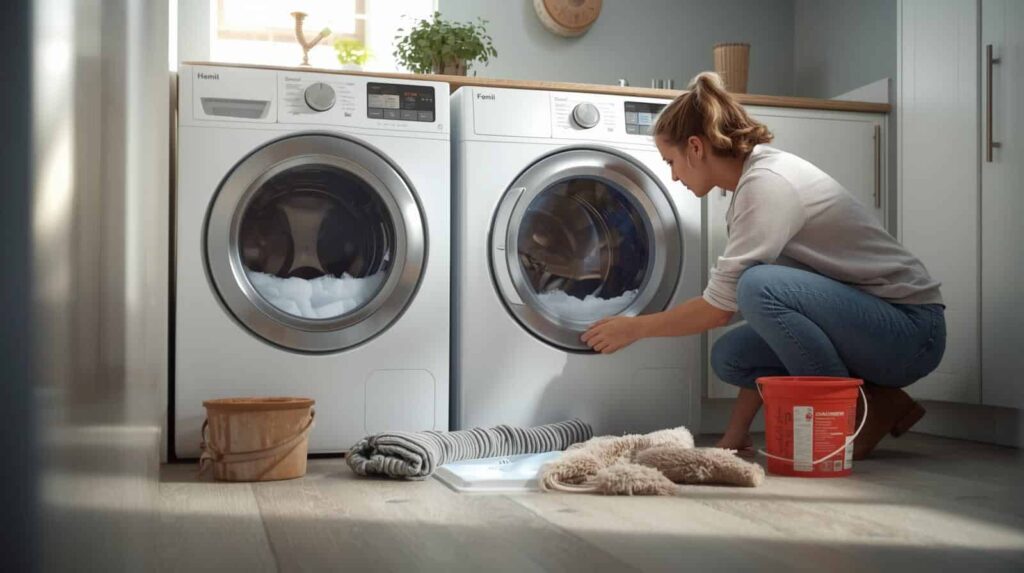
Pro Tip:
Before you start fixing anything, run the spin cycle once more. Sometimes a washer just pauses and will drain on the next cycle.
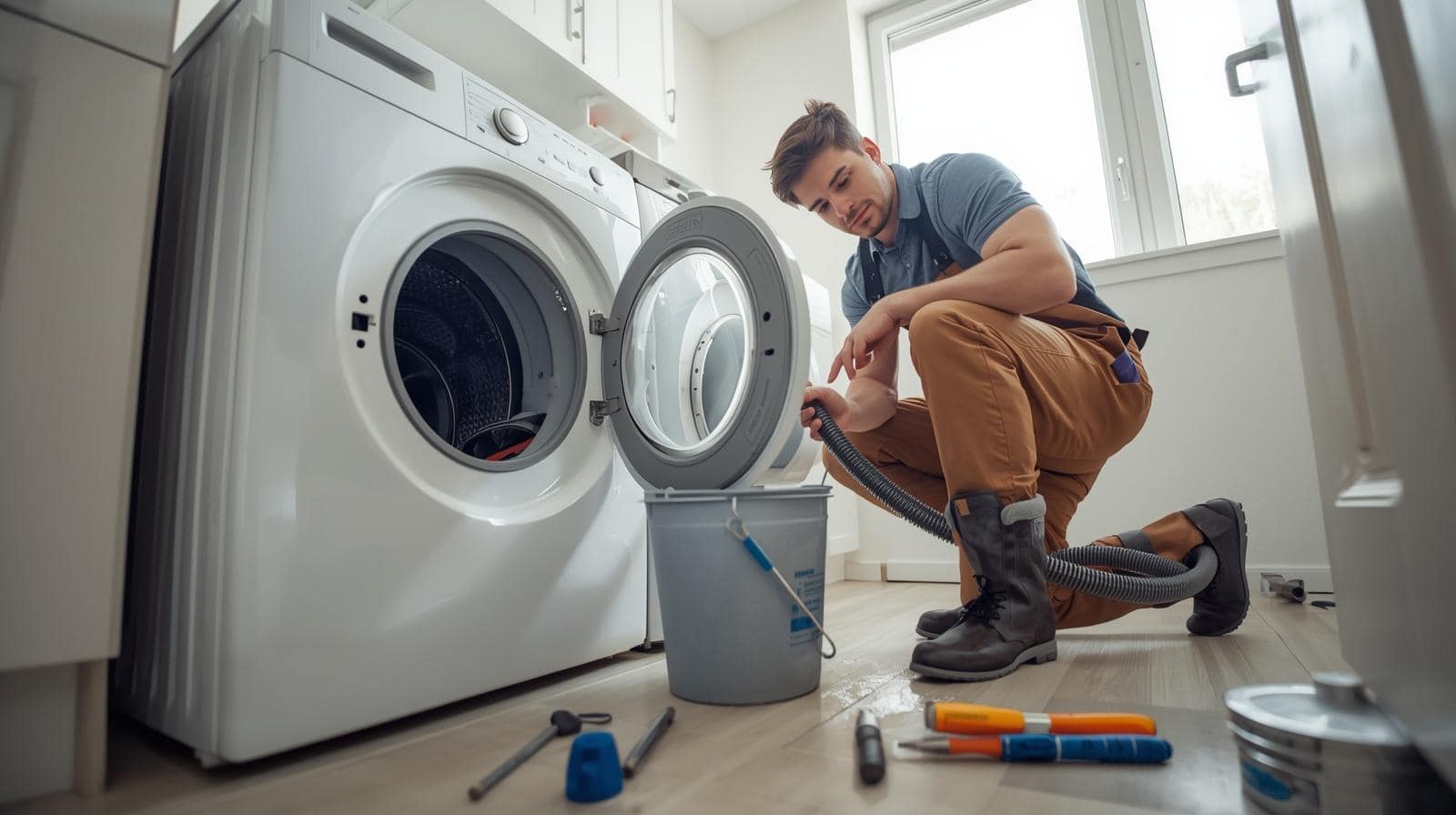
Safety First Before You Check Anything
Before you touch the washer, stop for a second.
Water and power don’t mix.
Here is what I always do first:
- Unplug the washer
- Turn off the water valves
- Put towels on the floor
- Grab a bucket
If the washer is full of water, you may need to remove some of it first.
Pro Tip:
A wet vacuum works great for pulling water out fast. I keep one in my truck for jobs like this.

Step-by-Step Guide to Fix a Washer That Won’t Drain
If you’re still wondering why is my washer not draining, try these checks one by one. These steps fix most machines.
1. Check the Drain Hose
The drain hose sits behind the washer. It carries dirty water to the house drain.
Sometimes it bends or gets blocked.
Here is what I do:
- Pull the washer away from the wall
- Look at the hose behind it
- Make sure it is not bent or crushed
- Remove the hose and check inside
Coins, lint, socks, and even hair pins can block it.

Pro Tip:
Run hot water through the hose in a sink. If water flows slow, the hose has a clog.
2. Clean the Pump Filter
Many front load washers have a small pump filter. This part traps lint and small items.
When it gets full, water can’t drain.
Here is what I do:
- Look for a small panel on the front of the washer
- Open it slowly
- Place a towel underneath
- Unscrew the filter cap
You might find coins, lint, or even small toys.
Clean it well and put it back.
Pro Tip:
I tell people to clean this filter once every month. It saves many service calls.
3. Check the Drain Pump
If the hose and filter look fine, the drain pump might be stuck.
The pump pushes water out of the washer.
Signs of a bad pump:
- Loud humming sound
- Washer spins but water stays
- Water drains very slow
Sometimes debris jams the pump blade.
If you hear the pump trying to run but nothing moves, it may need a new pump.
Pro Tip:
Most washer pumps cost $30–$80. Replacing one is cheaper than buying a new washer.
4. Make Sure the Lid Switch Works
Top-load washers have a lid switch. If the lid does not lock, the washer may stop before draining.
Try this quick test:
- Close the lid
- Press down on it
- Listen for a small click
No click? The switch may be bad.

Pro Tip:
I once fixed a washer just by adjusting the lid hinge. A loose lid can stop the drain cycle.
How to Prevent Drain Problems
A little care can stop most drain problems.
Here is what I tell homeowners to do:
- Clean the washer filter once a month
- Check pockets before washing clothes
- Don’t overload the washer
- Run a hot cleaning cycle once a month
These small habits keep the drain system clear.
Pro Tip:
Use less soap. Too much soap creates thick buildup inside hoses.
Quick Summary
If you’re asking why is my washer not draining, the cause is usually small.
Start with these checks:
- Inspect the drain hose
- Clean the pump filter
- Check the drain pump
- Test the lid switch
Most of the time the fix takes less than 20 minutes.
And if the washer is old or repairs keep adding up, it might be time for a new one.
I’ve worked on washers for more than 15 years, and I can tell you this: a small clog causes most drain issues. Once you clear it, the washer usually runs like new again.