
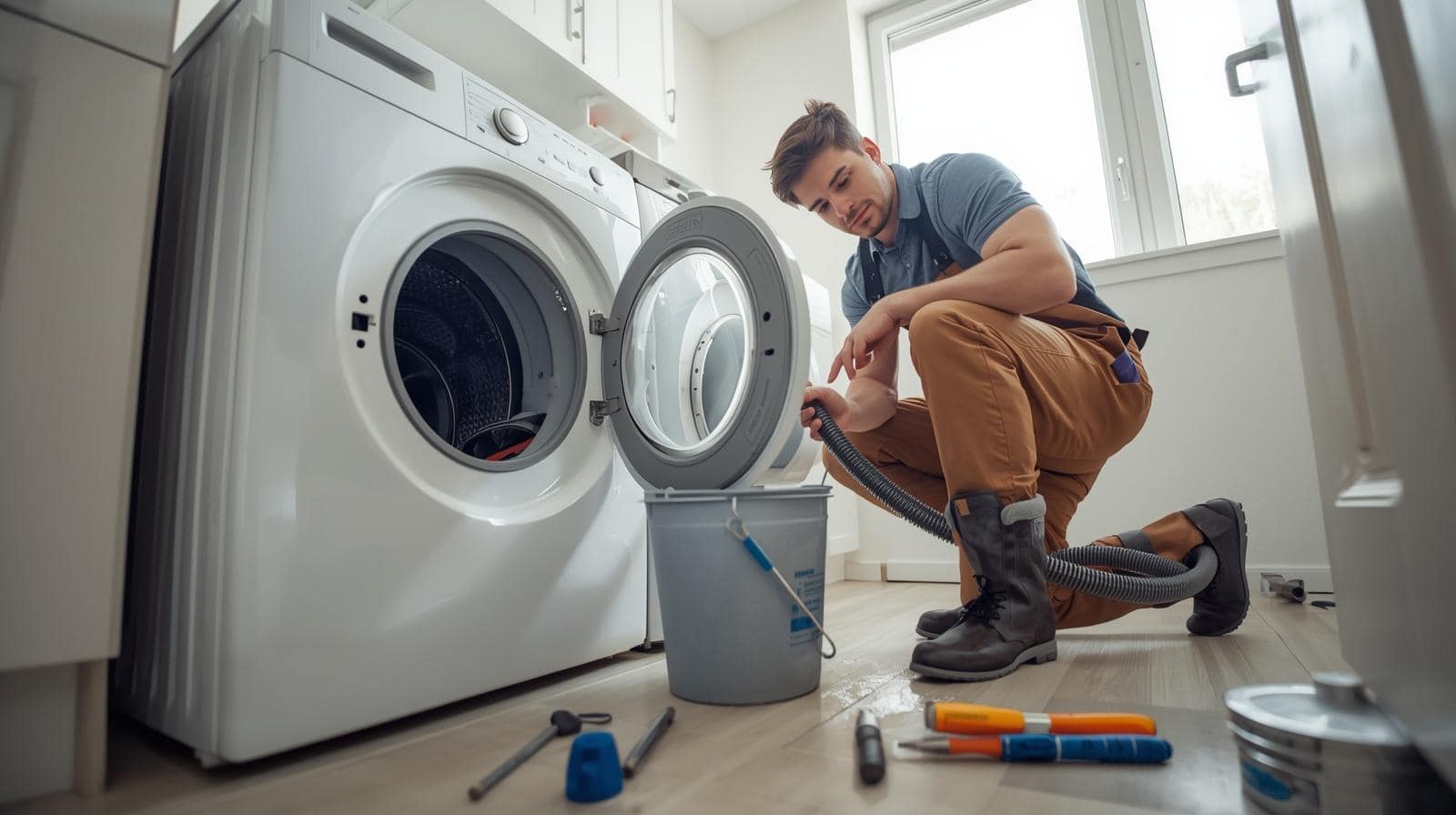
Yesterday, I saw a washer full of water in a small home I was fixing. The owner looked worried. The lid was open, wet clothes sat inside, and the machine just hummed. No drain. No spin.
I see this a lot.
If you’re here, you likely want to know how to drain a washer without making a mess on the floor. Good news. You can do this in about 15 minutes with basic tools.
I’ve fixed washers for over 15 years, and most of the time the fix is simple.
Let me show you what I do.
Why You May Need to Drain a Washer
A washer should pump water out after each wash. But when a washer not draining problem starts, water stays in the drum.
This can happen for a few reasons:
- Clogged washer drain hose
- Dirty washer drain filter
- Blocked pump
- Power issue
Sometimes it’s just lint, coins, or a small sock stuck in the filter.
Sound familiar?
Pro Tip:
If your washer smells bad or clothes come out wet, check the drain filter first. I find lint clogs in about half the homes I visit.

Tools You’ll Need
You don’t need fancy tools. Just a few simple things.
Tools
- Bucket
- Flat screwdriver
- Towels
- Gloves
Materials
- Clean cloth
- Mild soap
- Water softener (if you have hard water)
Pro Tip:
Put two old towels under the washer before you start. Even pros spill water now and then.
Safety First Before You Drain the Washer
Before we get to how to drain a washer, stop for one second.
- Safety matters.
- Water and power don’t mix.
- Here’s what I always do first.
Step 1: Unplug the Washer
- Pull the power plug from the wall.
- If you can’t reach it, shut off power at the breaker.
Pro Tip:
I keep a small flashlight in my tool bag. Washers sit in dark spots, and a little light helps a lot.

How to Drain a Top-Load Washing Machine
- Top load washers are easier to drain.
- Here’s the method I use.
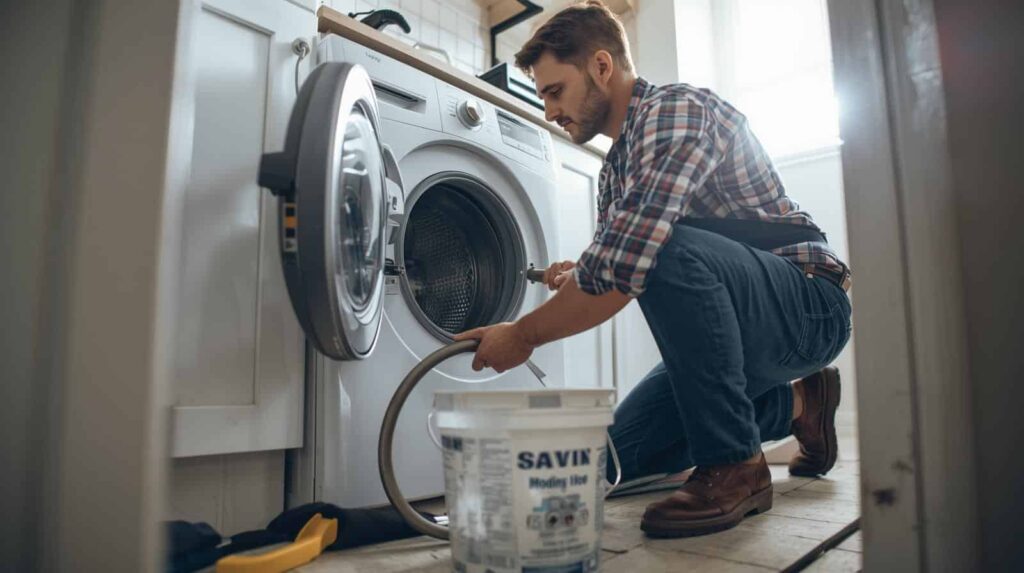
Step 1: Find the Drain Hose
- Pull the washer away from the wall.
- You’ll see a gray or black hose going into the drain pipe.
- That’s the washer drain hose.

Pro Tip:
Take a quick photo with your phone before moving hoses. It helps when you put things back.
Step 2: Place a Bucket Under the Hose
- Set your bucket low.
- Water may rush out fast.
- Now slowly pull the hose from the drain pipe.
- Water will start to flow.
- Let it empty.
Pro Tip:
If water stops too soon, lower the hose closer to the floor. Gravity helps the flow.
Step 3: Check the Hose for Blockage
Look inside the hose.
I often find:
- lint
- hair
- small cloth bits
Clean it with warm water.
Pro Tip:
Run tap water through the hose. If water moves slow, a clog is still inside.

Step 4: Reconnect and Test
- Put the hose back into the drain pipe.
- Plug the washer back in.
- Run a short spin cycle.
- If water drains, you’re done.
How to Drain a Front-Load Washing Machine
- Front load washers have one extra step.
- They hide the drain filter.
Step 1: Find the Service Panel
- Look at the lower front of the washer.
- You’ll see a small door.
- Open it.
Inside you’ll find:
- a small drain hose
- the drain filter
Pro Tip:
I always place a tray under this area. Water comes out fast.
Step 2: Use the Small Drain Hose
- Pull out the small hose.
- Remove the cap.
- Water will start draining.
- Let it empty fully.
This is the easiest way to learn how to drain a washer without moving the machine.
Step 3: Clean the Drain Filter
- Now twist the filter knob.
- Pull it out slowly.
You may find:
- lint
- coins
- hair pins
- small socks
Clean it well.

Pro Tip:
I once found $6 in coins inside a filter. Check carefully!
Step 4: Put Everything Back
- Insert the filter again.
- Close the panel.
- Run a short wash cycle to test.

How to Prevent Washer Drain Problems
A little care keeps your washer working for years.
Here are simple habits I tell homeowners.
Clean the filter every 2 months
This stops clogs early.
Don’t overload the washer
Heavy loads slow the pump.
Use the right soap
Too much soap builds up in the drain system.
Use water softener if needed
Hard water can leave mineral buildup.
Pro Tip:
Leave the washer door open after washing. This stops mold and bad smells.
Quick Summary
Here’s the quick version of how to drain a washer.
- Unplug the washer.
- Place towels and a bucket.
- Remove the drain hose or drain tube.
- Let the water empty fully.
- Clean the drain filter.
- Reconnect and test the washer.
Most of the time, that’s all it takes.
And if you ever see a washer full of water again, don’t panic.
Just grab a bucket.
You’ve got this.