

Yesterday, I saw a small puddle under a client’s water heater. That’s never a good sign. The tank had rusted through, and the owner asked if we could switch to a tankless system. I told him yes—and that’s when we started talking about how to install a tankless hot water heater.
I’ve installed many heaters over the past 15 years, and I can tell you this: tankless units are a smart upgrade if you want endless hot water and better space use. But the install has to be done the right way.
Let me walk you through it the same way I explain it to homeowners during a service call.
How to Install a Tankless Hot Water Heater (Step-by-Step Guide)
A tankless heater warms water only when you need it. No big tank. No waiting for hot water to refill. That’s why many US homeowners are switching.
Still, the install takes a few key steps.

Step 1: Turn Off Power, Gas, and Water
Before you start, shut everything down.
Turn off:
- Water supply
- Gas line or electric breaker
- Main power to the heater
This step keeps you safe while you work.
Sound obvious? You’d be surprised how many DIY installs skip this.

Pro-Tip:
I always open a hot faucet after shutting off water. This releases pressure from the pipes and makes the job cleaner.

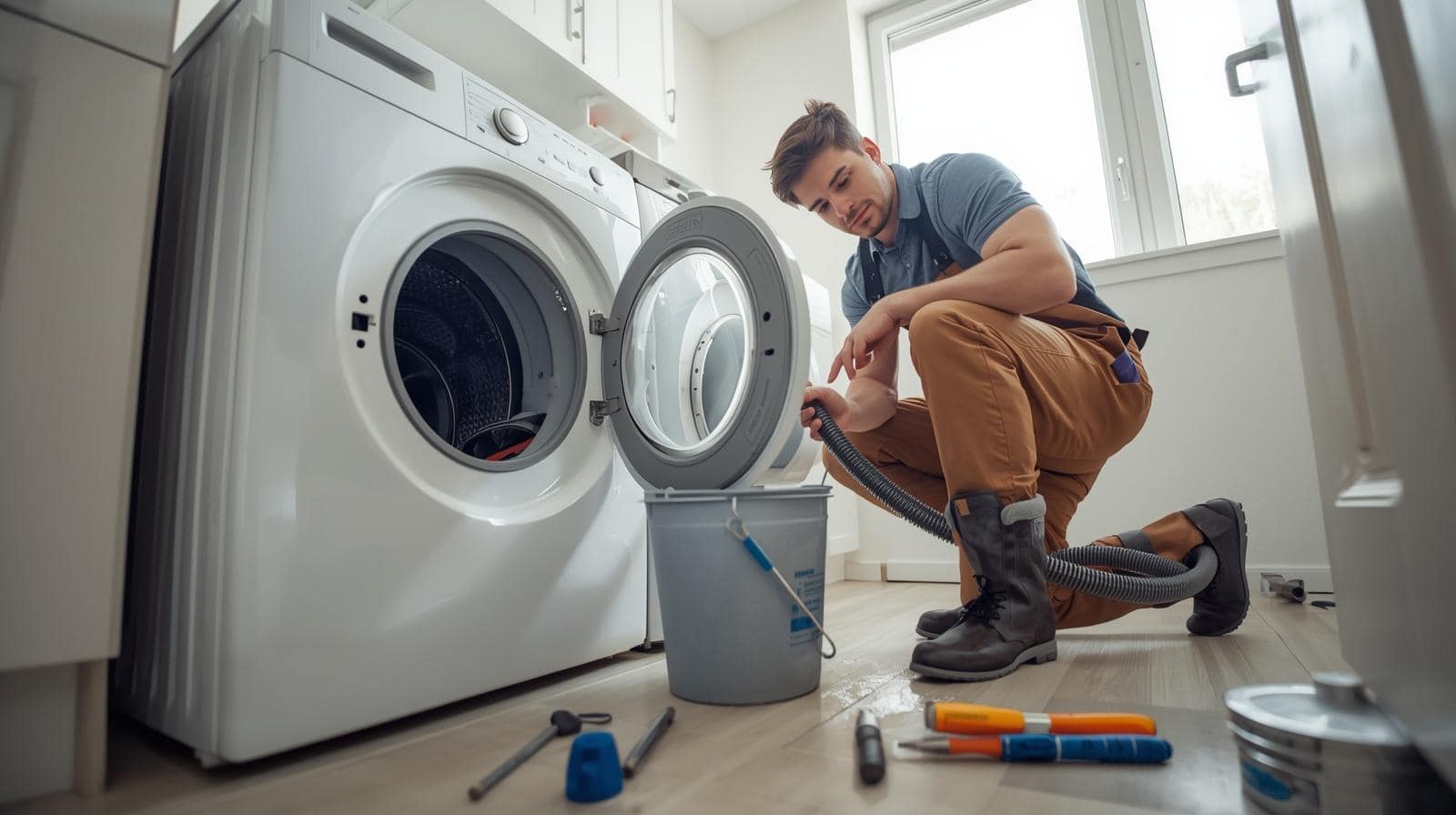
Step 2: Remove the Old Water Heater
If you’re replacing a tank unit, you’ll need to remove it first.
Start by:
- Draining the tank
- Disconnecting water lines
- Removing gas or power lines
- Taking off the vent pipe
Tank heaters are bulky. Sometimes very heavy.
I remember my first removal job years ago. I thought I could carry the tank myself. Bad idea. My back reminded me for two days.
Pro-Tip:
Use a small dolly. It saves your back and prevents floor damage.
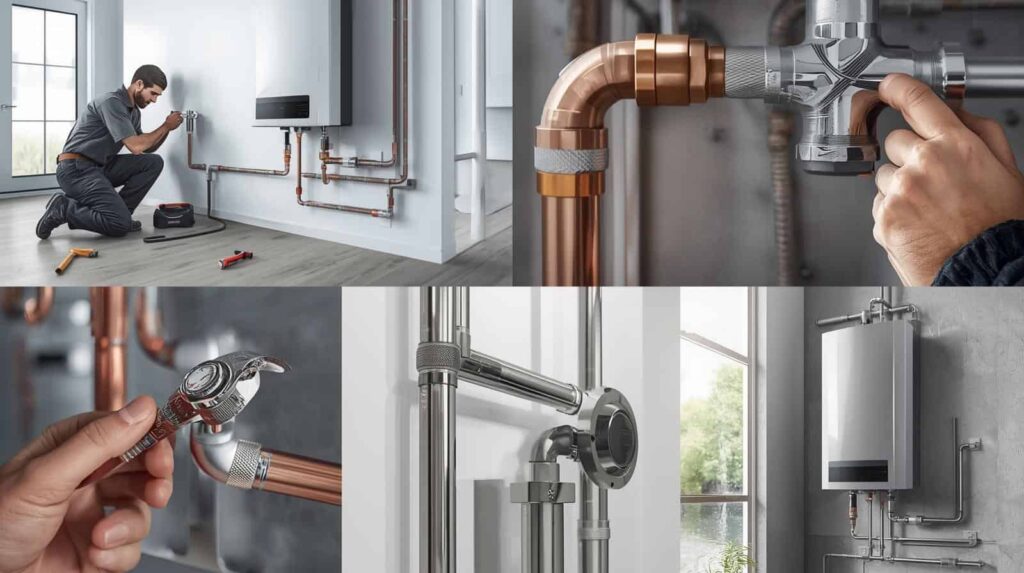
Step 3: Mount the Tankless Heater
Next comes the big step in how to install a tankless hot water heater—mounting the new unit.
Most tankless heaters mount directly on a wall.
Choose a spot that has:
- access to gas or power
- water line connections
- proper vent space
Use strong wall studs or a mounting bracket.
These heaters are lighter than tank units, but they still need solid support.
Pro-Tip:
Leave extra space around the unit. Future repairs are much easier when the heater isn’t cramped.
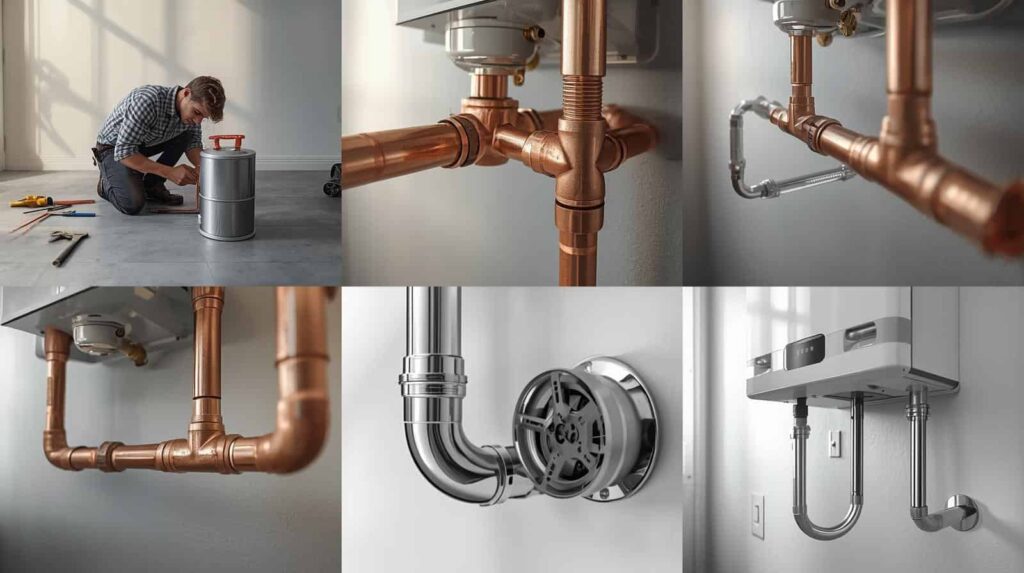
Step 4: Connect the Water Lines
Now connect the cold and hot water lines.
You’ll usually see two ports:
- Cold water inlet
- Hot water outlet
Flexible stainless lines work best here.
They make the job faster and reduce vibration noise.
If your home has hard water, this is the perfect time to add a water filter or scale filter.
Hard water can shorten heater life.
Pro-Tip:
Add shut-off valves on both lines. It makes future flushing and repair simple.
Step 5: Install the Gas Line or Power Supply
Tankless heaters can run on gas or electric.
Gas models are more common in US homes because they produce stronger heat flow.
If you’re installing a gas tankless unit:
- connect the propane or natural gas line
- check pressure rating
- tighten all fittings
Then test with leak detection soap.
Electric models are simpler but often require higher voltage circuits.
Pro-Tip:
If your gas line looks small, call a pro. Tankless heaters need strong gas flow.
Step 6: Install the Vent System
Gas tankless heaters need proper venting.
This allows exhaust gases to leave the house safely.
Use:
- stainless steel vent pipe
- manufacturer approved vent kit
Run the vent through an outside wall or roof.
Poor venting is the most common install mistake I see.
Pro-Tip:
Always slope the vent slightly upward toward the outside wall. This keeps moisture from flowing back.
Step 7: Turn On Water and Test the System
Now you’re ready to test.
Turn the water supply back on.
Then:
- open hot water faucets
- check for leaks
- restore power or gas
The heater should start heating water right away.
That’s the beauty of tankless systems.
You get hot water almost instantly.
This final test confirms you installed the system correctly.
Safety First
When learning how to install a tankless hot water heater, safety matters.
Never ignore these checks:
- Gas leaks
- Proper vent airflow
- Electrical grounding
- Secure wall mounting
If something looks wrong, stop and inspect.
I always tell homeowners this: a five-minute check can prevent a serious repair later.
Quick Summary
Installing a tankless heater isn’t the hardest home job, but it does require care.
The basic steps are simple:
- Turn off water, gas, and power
- Remove the old heater
- Mount the tankless unit
- Connect water lines
- Attach gas or electric supply
- Install proper venting
- Test the system
Follow those steps and you’ll have reliable hot water for years.
FAQ: Tankless Water Heater Installation
Most installs take 3 to 5 hours if the plumbing and gas lines are ready.
Yes, many homeowners can. But gas and vent work may require a licensed professional in some states.
Yes. They heat water only when needed, which can reduce energy costs.
No. As long as water flows through the unit, it keeps heating it.
How long do tankless heaters last?
Most systems last 15 to 20 years, which is longer than tank heaters.
If you’re thinking about upgrading your home’s hot water system, learning how to install a tankless hot water heater is a great first step. Done right, it can give your home endless hot water, lower energy use, and years of reliable service.